
News
Stay up to date on the latest crypto trends with our expert, in-depth coverage.


NFT Market Cap Slides Near Record Lows as Ethereum Drop Erases Blue-Chip Gains
BeInCrypto·2026/06/07 11:57

Vietnam Plans Pilot Crypto Asset Trading Market: What It Means
Coincu·2026/06/07 11:45
Long-Term Bitcoin Trader to XRP Holders: This Is the Last Opportunity and Greatest Shift
TimesTabloid·2026/06/07 10:03
Apple's WWDC Will Be a Make-or-break Moment for the Company's Fledgling AI Strategy
moomoo-证劵·2026/06/07 09:01
Hormuz Crisis Exposes a Global Flaw That Will Take Years to Fix
moomoo-证劵·2026/06/07 09:01
Crypto spot volume falls to $679B as retail demand weakens
Crypto.News·2026/06/07 08:33

PiggyBank Reports 15% Drawdown in USDC Vault After LAB Basis Trading Error
Coincu·2026/06/07 06:27
Expert States Where XRP Will Go Next If There Is Massive Capitulation
TimesTabloid·2026/06/07 06:03

Tom Lee Says Crypto Is the Only Way to Tokenize in the AI World
Coincu·2026/06/07 02:18
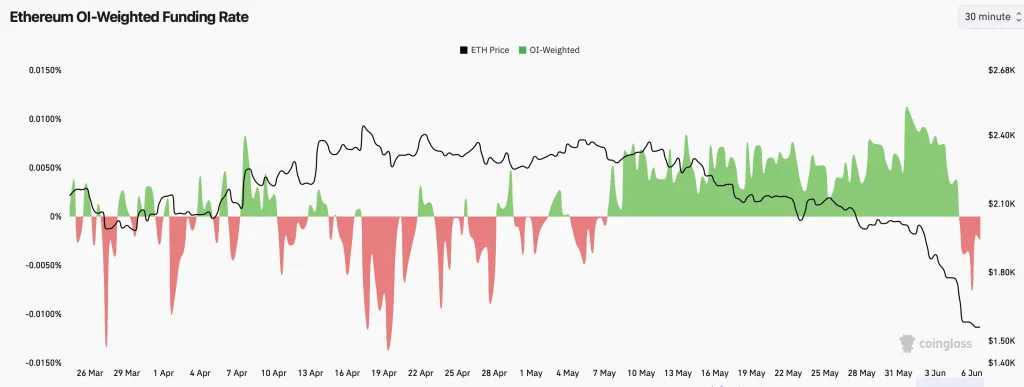
Has Ethereum (ETH) Price Finally Bottomed? Here’s Where It Could Head in June 2026
Coinpedia·2026/06/06 21:36
Flash
01:47
Singapore's benchmark stock index rises 1%, reaching a record highGlonhui June 17|The Eighth Eastern Timezone benchmark stock index once rose by 1%, reaching 5,169.40 points, hitting a historic high.
01:47
US-Iran Agreement Includes Oil Sanctions Waiver, 68 Million Barrels of Stranded Crude Oil to Be Released, Iranian Oil Tankers Simultaneously Start GPS Signaling in Preparation for Lifting of BlockadeBlockBeats News, June 17th, as the deadline for the US-Iran understanding memorandum approaches, signals of Iran's oil exports being unblocked have been released one after another. Bloomberg vessel tracking data shows that in recent days, a total of four vessels linked to Iranian oil tankers have reactivated their AIS transponders, actively sailed out of the Strait of Hormuz into the Gulf of Oman. Among them are two VLCCs with a single-voyage capacity of 2 million barrels each and two product tankers that smoothly crossed the Strait of Hormuz. Ship data firm TankerTrackers.com also disclosed on the same day that at least three tankers that were previously berthed at the Chabahar port have left their berths.
Iranian oil tankers have long evaded sanctions tracking through methods such as turning off their AIS signal, signal spoofing, and interference. The collective proactive public navigation of multiple vessels this time is interpreted by the market as an early signal of the gradual lifting of the US maritime blockade.
On the agreement front, Bloomberg cited sources close to the final draft of the agreement on Tuesday as saying that the US-Iran agreement will grant Iran pre-sanctions relief on oil. After the agreement is signed, Iran can immediately sell crude oil to the outside world without any additional transitional period. Shipping analysis firm Kpler estimates that due to the impact of the US blockade, around 68 million barrels of Iranian oil are currently stranded at sea and unable to be exported. Once the export channels are opened, a significant incremental supply will directly ease the global oil supply tightness and impact oil prices.
The Iranian Deputy Foreign Minister stated through the ISNA media that the US maritime blockade of Iranian ports, initiated in April this year, has entered a phased lifting stage. According to both sides' plans, after the formal signing of the peace agreement this Friday, Iran's closure of the Strait of Hormuz and the US's comprehensive maritime ban on Iran's shipping will be lifted simultaneously. The US Central Command has not yet responded to related inquiries.
01:41
Technical Analysis: Brent crude oil may further decline to the $76.65-$77.75 range1. According to the Fibonacci theory analysis, Brent crude oil futures may further extend the current downtrend to the $76.65 to $77.75 per barrel range.2. The contract is currently experiencing a strong third wave of declines. In the downward trend that started from the $109.70 high, a series of projection targets have emerged.3. After breaking below the 323.6% projection level ($79.13), prices are expected to further test the $75.50 to $77.75 range. In the short term, resistance lies at $80; if this level is effectively breached, a rebound to the $81.36 to $82.64 range is possible.4. From the daily chart perspective, projection analysis of the c wave starting from $112.94 shows the price has broken below the key support at $81.86 (i.e., the 100% projection level). This break opens space for further downside, with the next aggressive target area pointing to the $62.65 to $70 range.