News
Stay up to date on the latest crypto trends with our expert, in-depth coverage.


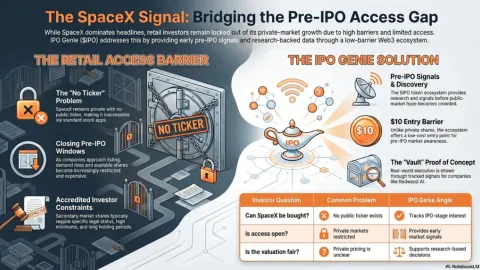
Want SpaceX Before It Goes Public? The Pre-IPO Window May Be Closing Fast
BlockchainReporter·2026/05/11 13:01

XRP At $21.5 Isn’t A Bet: Why This Analyst Says A Measured Move Is Coming
Newsbtc·2026/05/11 13:01
Atomic Swaps 101: Everything You Need to Know
Coinspaidmedia·2026/05/11 13:00
Amazon Web Services Adds Crypto Micropayment Support for AI Agents
Coinspaidmedia·2026/05/11 12:48
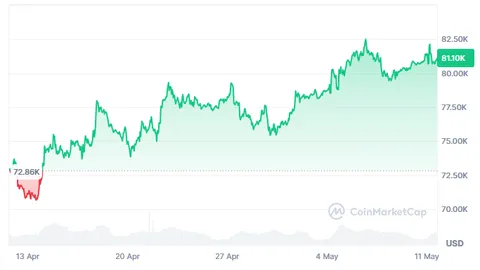
Bitcoin Volatility Returns as Price Tests Critical Indicator Level
post-161752
post-161752
post-161752
Newscrypto·2026/05/11 12:45
TSLA: Structural Breakout Changes The Entire Picture
TradingView·2026/05/11 12:45
$NVDA , Idea
TradingView·2026/05/11 12:42
India Jewelry Stocks Lose 12% as Modi Targets $72 Billion Gold Import Bill
BeInCrypto·2026/05/11 12:39
Football Ticket Scams Up 36% Ahead of 2026 World Cup, Lloyds Warns
BeInCrypto·2026/05/11 12:39
US Dollar: Downside risks for DXY as geopolitics dominate – OCBC
FXStreet·2026/05/11 12:36
Flash
04:25
SoftBank's Masayoshi Son Is Not Optimistic About Elon Musk's Space Data Centers, Says the Key to Winning the AI Race Lies in Ground-Based Computing PowerGlonghui, June 23 — SoftBank Group founder Masayoshi Son stated that the space data center proposal, strongly promoted by Elon Musk, has limited value, and the outcome of the artificial intelligence race will be determined by terrestrial computing power. On Tuesday, during SoftBank's annual mobile business shareholders meeting, Masayoshi Son discussed that the main perceived advantage of building space data centers is a substantial reduction in electricity costs, but electricity fees constitute only a small portion of a data center's overall operating expenses, with chips and other hardware being the major expenditures. He added that even if electricity costs could be saved, companies would still face high material space transportation costs, maintenance expenses, and communication latency issues, which outweigh the benefits. On-site, a SoftBank shareholder asked whether the Japanese company would follow Tesla's CEO's grand vision. Masayoshi Son responded: “AI competition over the next few years is far more critical than distant plans for ten years from now.” SoftBank will focus on building large-scale, robust terrestrial data center computing power. In his view: “First movers will win.”
04:23
Futures Hotspot TrackingOn one hand, the supply uncertainty caused by the centralization of Indonesia's DSI, on the other, the B50 policy forces inventory absorption, coupled with the fragile balance of the US-Iran agreement. In the second half of 2026, will the palm oil market be dominated by policies, energy, or climate?
04:17
British scholar: "Brexit" backfires on the UK economy, intensifying political turmoilOn June 23, 2016, the United Kingdom decided to leave the European Union through a nationwide referendum. Ten years later, the profound impact of "Brexit" on all sectors of British society has become fully apparent. British scholars have pointed out that "Brexit" has had a significantly negative impact on the UK economy and has intensified political instability in the country; meanwhile, on the level of international geopolitics, both the UK and the EU have suffered losses. According to estimates from official UK agencies, fifteen years after "Brexit," the size of the UK economy will be 4% smaller than if it had remained in the EU; forecasts from the National Bureau of Economic Research in the US are even more pessimistic, projecting a decline of 6% to 8%, with investment—which serves as the core engine of economic growth—falling by 18%. (CCTV)