
News
Stay up to date on the latest crypto trends with our expert, in-depth coverage.


Crypto Futures Liquidations Unleash $218M Storm as Ethereum Longs Face Brutal Squeeze
Bitcoinworld·2026/02/16 07:06
Cryptocurrency Opportunity: Ray Dalio’s Dire ‘World Order Collapse’ Warning Sparks Analysis
Bitcoinworld·2026/02/16 07:06

AMD and TCS to bring state-of-the-art 'Helios' rack-scale AI architecture to India
Finviz·2026/02/16 07:03
UniSwap Debuts on X Layer, Powering Cross-Chain Decentralized Applications with Cost-Efficient Interoperability Solutions
BlockchainReporter·2026/02/16 07:00
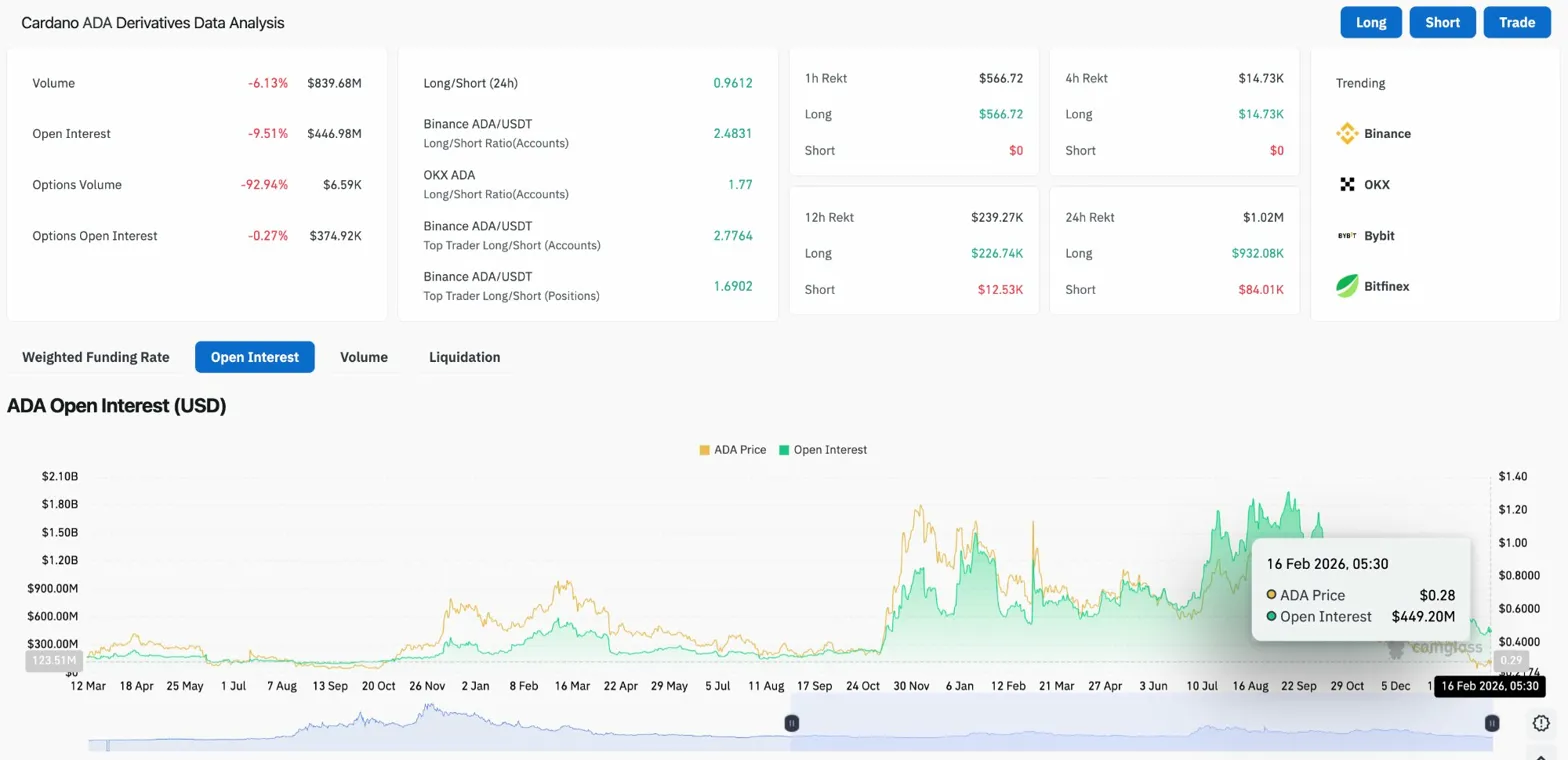
Cardano Price Prediction: ADA Tests Trendline Support After Hoskinson’s Market Warning
CoinEdition·2026/02/16 06:27
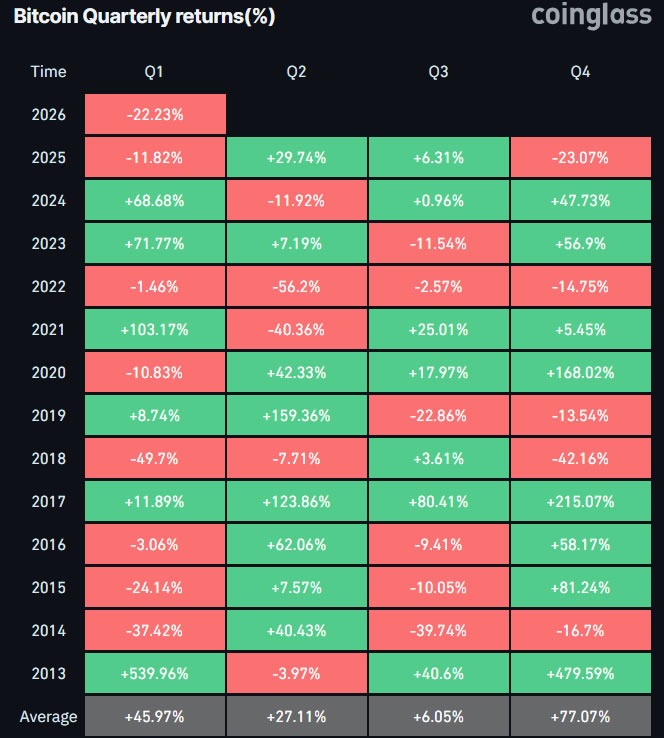
Bitcoin down 22%, could it be the worst Q1 since 2018?
Cointelegraph·2026/02/16 06:21
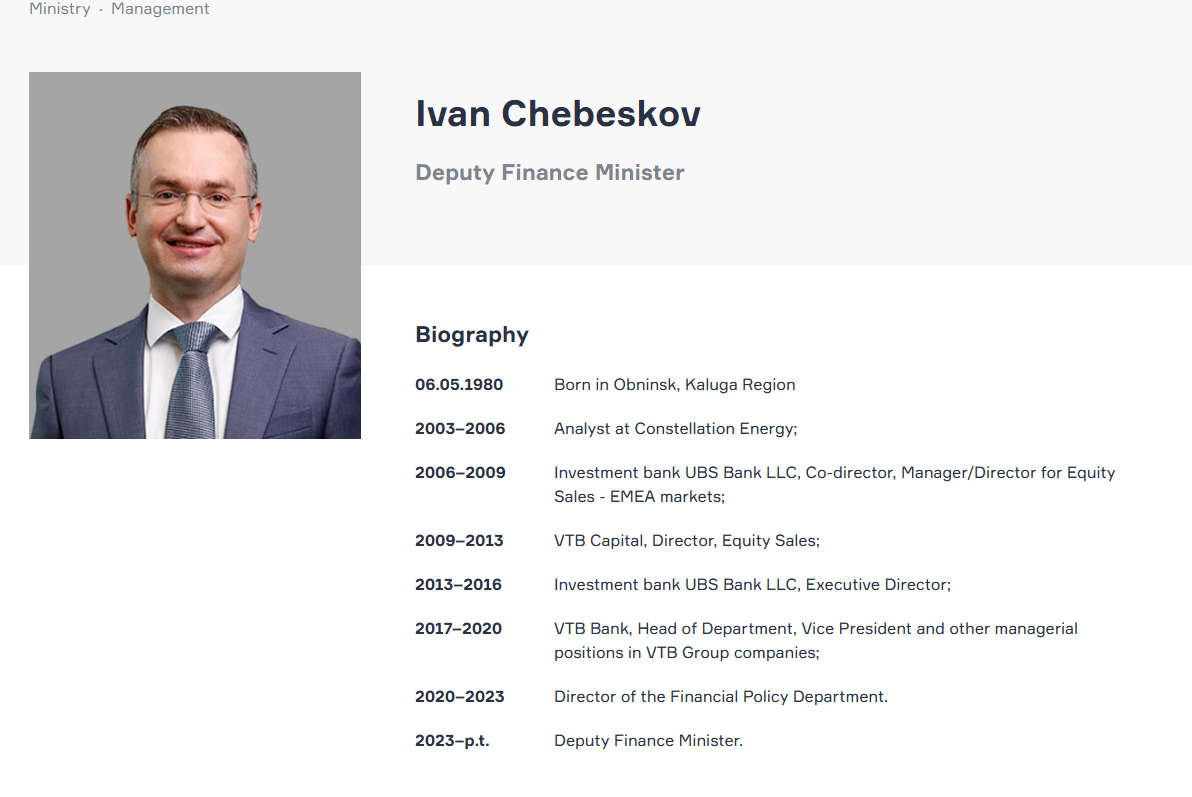
Russians move $129B in crypto yearly ‘outside our attention’: Official
Cointelegraph·2026/02/16 06:18
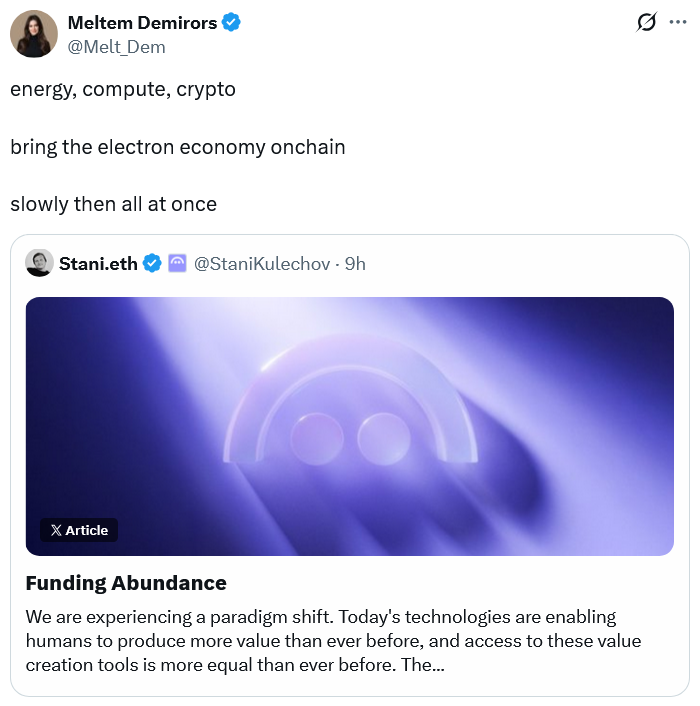
Aave founder pitches $50T ‘abundance asset’ boom to drive DeFi
Cointelegraph·2026/02/16 05:06
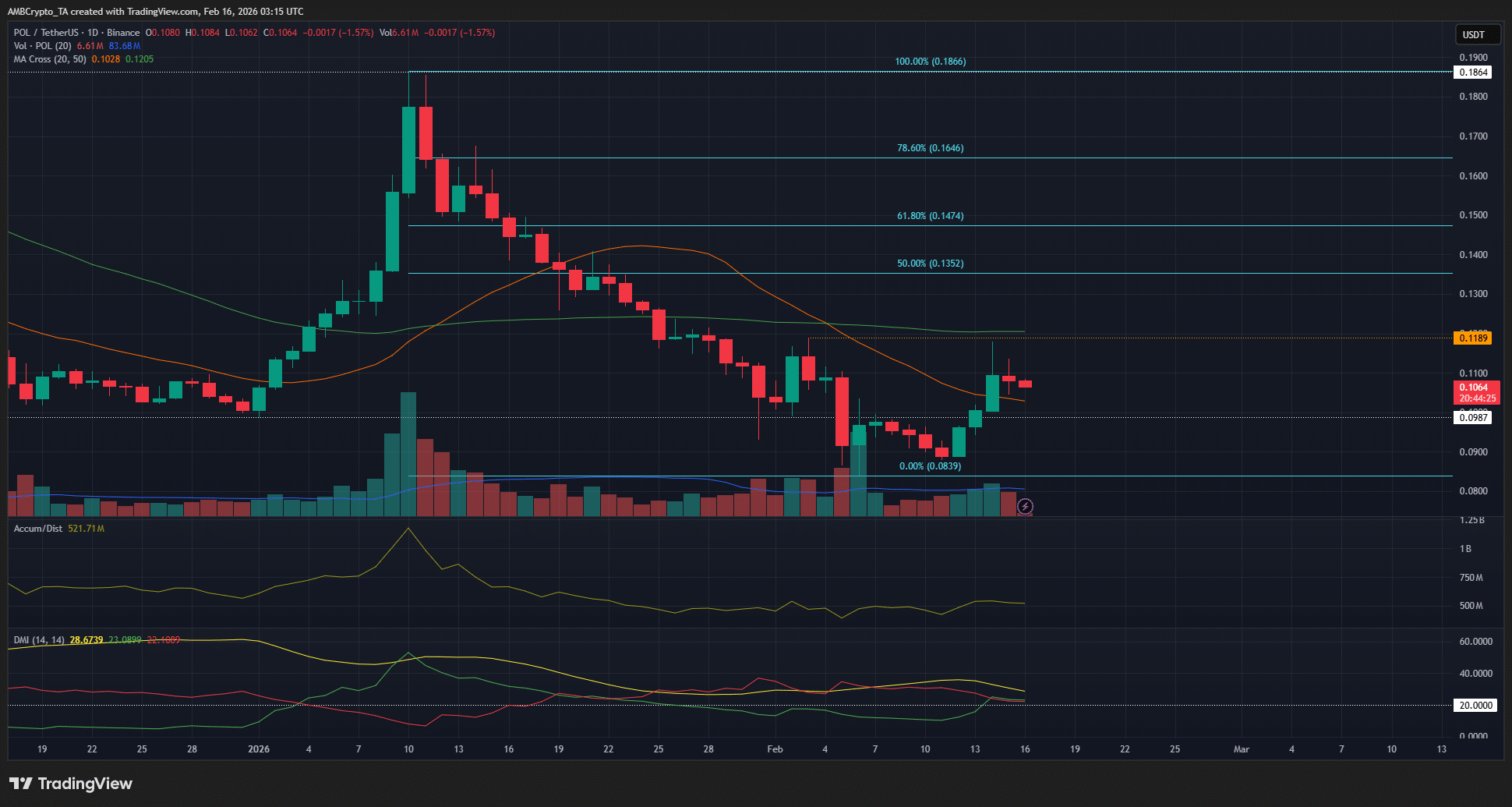
Polygon’s high-volume rally ends in a sweep – $0.135 remains target ONLY IF…
AMBCrypto·2026/02/16 05:03
ECB: The upcoming action will be an increase
101 finance·2026/02/16 05:00
Flash
03:40
Jim Cramer: AI Trading Logic Shifts, Suppliers like Micron, Intel to Benefit from Massive Spending CycleBlockBeats News, July 1st – Former hedge fund manager and CNBC host Jim Cramer stated that Wall Street's current pricing logic for AI trading has changed, with the market rewarding tech companies providing products for the AI frenzy rather than clients footing the bill for AI investments. Cramer indicated that in June, the combined market value of the "Big Seven" evaporated by around $2.3 trillion, causing investors to question whether these companies' massive AI spending will ultimately generate sufficient profits and free cash flow. Amazon, Alphabet, Microsoft, and Meta are among the companies with the largest AI data center expenditures, and he believes these hyperscale cloud providers are becoming victims of their own AI ambitions.
Cramer said that while these companies have the financial capacity to continue investing billions of dollars, the market demand for computing infrastructure has outstripped supply, driving up costs for key components such as memory chips and networking devices. This shift has benefited the "sell-shovel" players in the AI frenzy rather than the spenders. He stated, "The biggest gainers are the opposite of the Magnificent Seven, producing products that are in short supply and experiencing overwhelming demand."
Cramer pointed out that memory chip manufacturers Micron Technology and Sandisk, as well as Intel, Marvell Technology, and AMD, were among the biggest winners in the second quarter. He stated that supply-demand imbalances drove strong profit growth for these companies, leading to analysts continuously upgrading ratings and price targets. Among them, Cramer has identified Intel as his new top pick, noting that CEO Pat Gelsinger is revitalizing the chipmaker, and Intel is poised to benefit from CPU, advanced chip packaging, and the growth of U.S. domestic semiconductor manufacturing demand.
03:35
Analyst: U.S. unemployment rate is expected to remain steady at 4.3% in June, labor market resilience persists```htmlGolden Ten Data reported on July 1st that Jason Pride, Chief Investment Strategist at Glenmede, and Michael Reynolds, Vice President of Investment Strategy, stated that investors should expect the US unemployment rate in June to remain unchanged at 4.3%, with non-farm payrolls increasing by about 87,000. Although this is a decrease from May’s 172,000, it is still considered a strong result in the current “low hiring, low layoffs” labor market environment. While employment fundamentals largely remain intact, the focus of the Federal Reserve has shifted to inflation, which means that the timing of any future easing policy will depend more on inflationary pressures rather than employment growth itself.```
03:34
Wells Fargo: U.S. labor demand remains largely stable with no clear signs of renewed accelerationGlonghui, July 1 – According to a team of economists at Wells Fargo, the US labor market continues to gradually stabilize after hitting a low point in 2025. Initial jobless claims remain at low levels, and employment PMI data from various Federal Reserve districts also showed a slight rebound in hiring activity in June. However, other recent indicators have softened. Since the spring, the number of job postings and ADP’s weekly hiring indicators have both declined, while small business hiring plans dropped to a new low for this cycle in May. Overall, the data suggests that labor demand remains generally stable, with no clear signs of renewed acceleration.
News