
News
Stay up to date on the latest crypto trends with our expert, in-depth coverage.

1US crypto ETFs are pulling Bitcoiners into TradFi: BlackRock's Jay Jacobs2Accenture stock plummets 18% to near ten-year low under dual pressure from AI impact and Middle East turmoil3Is SpaceX the Ultimate Exit Liquidity for Billionaires?

Matrixport: ETH volatility looks cheap relative to BTC volatility
Cointime·2024/05/20 10:49

Bitcoin: Will Price Rise After Saylor’s “Bet on Bitcoin” Call?
Coinedition·2024/05/20 10:25

Crypto Whale Offloads $46 Million in Ethereum as Market Eyes ETF Decision
BeInCrypto·2024/05/20 09:58
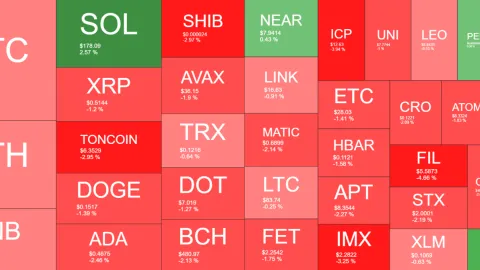
Bitcoin (BTC) Price Unstable at $67K, Altcoins Turn Red (Market Watch)
SOL is among the few altcoins in the green now.
Cryptopotato·2024/05/20 08:46

Hidden Gems 💎: STRK, HFT and BLUR
Cryptonews·2024/05/20 08:22
The transaction volume of 6 Hong Kong virtual asset ETFs today was HK$26.1102 million
Cointime·2024/05/20 08:19

Our Bitcoin Greed & Fear Index Turns Bullish, This Is Our Favorite Trade
Institutional Crypto Research Written by Experts
10xResearch·2024/05/20 07:42

ETFs buy 3X new BTC supply — 5 Things to know in Bitcoin this week
Bitcoin is facing renewed calls for a supply shock as exchange reserves hit seven-year lows, and BTC price action focuses on final resistance.
Cointelegraph·2024/05/20 07:34

Bitcoin lingers below $67,000 as sideways price action continues
Bitcoin’s price inched close to $67,000 on Monday.Over the past weekend, bitcoin has seen a 5% hike in price.
The Block·2024/05/20 07:25
Flash
13:43
Russia sells shares in top gold mining company for $1.3 billion, deal price below expectationsGolden Ten Data reported on June 19 that Russia has sold a stake in a leading gold mining company that was confiscated from a billionaire last year; despite multiple attempts to sell in the past, the final sale price was only about half of the original expected price. According to a report from Russia’s TASS news agency citing the auction announcement on Friday, Moscow-based BTS-Most Holding won the "Dutch auction" with a bid of 93 billion rubles (approximately $1.3 billion), acquiring a 67.2% stake in Yuzhuralzoloto PJSC and its affiliated companies. A "Dutch auction" is a sales method where the seller gradually lowers the asking price until a buyer agrees to purchase the asset.
13:36
TASS: Russian fertilizer exports up 7% this year, reaching 5.5 billion USDTASS: Russia’s fertilizer exports increased by 7% this year so far, reaching $5.5 billion
13:33
Billions releases strategic roadmap: focusing on agent business and payment infrastructure developmentChainCatcher news, the AI identity and Agent infrastructure project Billions has released its latest strategic roadmap, announcing that it will focus on advancing Agent business and Agent payment-related infrastructure development, driving AI Agents to evolve from information processing tools to active participants in economic activities. Billions stated that as Agents begin to independently complete service calls, payment settlements, product purchases, and task executions, AI is gradually entering the Agent Economy era. In the future, Agents will need not only identity and permission management capabilities, but also the ability to participate in real business activities and value exchanges. Currently, Billions has launched payment-related components based on the x402 protocol, including Agent Skill, server-side extensions, and an SDK. The team stated that they will continue to expand product capabilities around Agent authentication, authorization management, payment execution, and commercial collaboration scenarios, building an infrastructure network oriented towards the Agent Economy. Billions believes that automated value exchanges between Agents, and between Agents and services, will become the next stage of AI development, and that Agent business networks are expected to become an important component of the future digital economy.
News