
News
Stay up to date on the latest crypto trends with our expert, in-depth coverage.

1US crypto ETFs are pulling Bitcoiners into TradFi: BlackRock's Jay Jacobs2Accenture stock plummets 18% to near ten-year low under dual pressure from AI impact and Middle East turmoil3Is SpaceX the Ultimate Exit Liquidity for Billionaires?
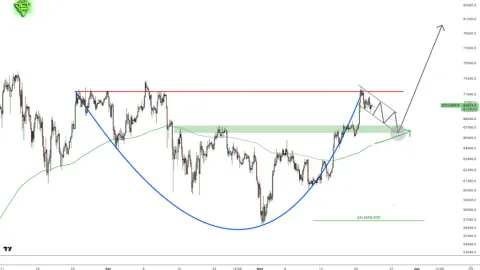
Bitcoin is headed for $90,000 according to this technical pattern
Cryptodnes·2024/06/07 17:46
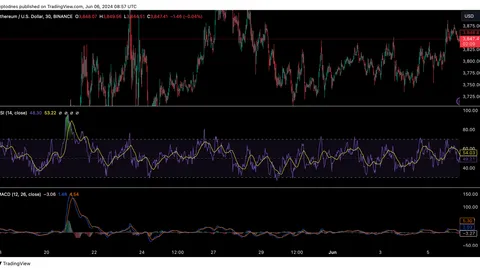
What technical indicators show about the price of Ethereum
Cryptodnes·2024/06/07 17:46

Crypto Whales Accumulate New Solana Meme Coin – Could It Be the Next Pepe?
Cryptonews·2024/06/07 17:37

MAGA Hat Meme Coin Goes Viral as Dogecoin Rival Scoops $2.9 Million
Cryptonews·2024/06/07 17:37
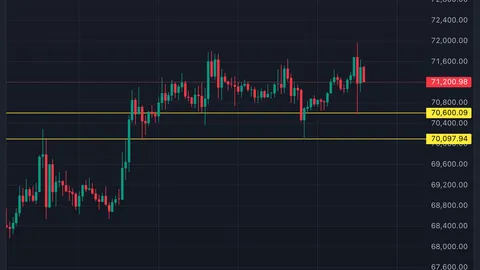
Bitcoin dips on unexpectedly positive US job figures but bounces straight back
Cryptodaily·2024/06/07 17:37

Week in Crypto: Ripple Transfers XRP, Binance Delists Altcoins, and Notcoin Surges
BeInCrypto·2024/06/07 17:34

Bitcoin ETF flows will send BTC price into ' parabolic run,' traders say
Cointelegraph·2024/06/07 17:25
‘Roaring Kitty’ Eyes Billion-Dollar Exposure on GME Rally
DailyCoin·2024/06/07 16:56

‘Mini MicroStrategy’ Semler Scientific Announces $17 Million Bitcoin Purchase
Cryptonews·2024/06/07 16:52
Price analysis 6/7: BTC, ETH, BNB, SOL, XRP, DOGE, TON, SHIB, ADA, AVAX
Cointelegraph·2024/06/07 16:46
Flash
02:17
Vance advocates for the state to hold shares in AI giants, while Musk suggests directly giving money to the public to cope with future major deflation.Odaily reported that US Vice President JD Vance stated in an interview with CEO Diary that Trump supports the establishment of a US sovereign wealth fund and holding equity in leading AI companies. Vance believes that large AI enterprises should not be allowed to become unrestrained monopolies, and advocates for the country to hold shares and implement mechanisms for labor participation, enabling ordinary workers to directly share in the economic dividends brought by AI. In response, Musk publicly stated on X that, compared to the government holding company equity, a better approach would be for the Treasury to directly distribute money to the public. Musk noted that, driven by AI and robotics, the growth in supply of goods and services will outpace the growth of the money supply, meaning direct cash distributions would not cause inflation. Instead, the real issue to address in the future will be "major deflation." The disagreement mainly centers on the path for wealth distribution. Vance prefers distributing returns by the government’s participation in the production side, while Musk advocates for directly subsidizing citizens on the consumption side and opposes government intervention in corporate ownership structures.
02:14
Signs of 'Covert Passage' in the Strait of Hormuz; Iran Reports No Visible Traffic Records 24 Hours After Closure Announcement On June 21, the latest monitoring data indicated that since the Islamic Revolutionary Guard Corps announced the closure of the Strait of Hormuz, there have been no visible vessel traffic records in the strait over the past 24 hours. Analysts suggest that this unusual phenomenon may not mean that shipping activities have completely ceased, but rather that some vessels have activated 'covert passage' modes—such as turning off AIS (Automatic Identification System) and other electronic tracking devices to evade monitoring while attempting to cross.
02:13
JPMorgan Chase: AI Capital Spending Raised to $5.5 Trillion, Broadcom Expected to Exceed $150 Billion in AI Revenue by 2027BlockBeats News, June 21st - JPMorgan Chase recently released a research report stating that the forecast for AI total capital expenditure by 2030 has been raised from $51 trillion to $55 trillion, with accompanying debt financing scaled up to $41 trillion. The report points out that the surge in AI demand and the ongoing scarcity of computing power have jointly driven the acceleration of this round of expenditure, with Google's monthly AI token processing volume reaching 3.2 trillion times. Meanwhile, companies such as Microsoft and Uber have exhausted their annual AI budgets within months.
Regarding mega-scale cloud providers, the four major American supercomputing giants (Google, Amazon, Microsoft, Meta) are expected to have a combined capital expenditure guideline of around $700 to $725 billion in 2026, a year-on-year increase of about 75%, and is expected to exceed $1.1 trillion in 2027. JPMorgan Chase predicts that their combined operating cash flow will exceed $900 billion in 2027, but it will still be insufficient to cover the massive expenditure plan, making debt and equity financing a norm.
In terms of chip beneficiaries, JPMorgan Chase predicts that Broadcom will achieve over $150 billion in AI-related revenue (including ASIC/XPU and AI networks) by 2027. The management has disclosed that the 2027 order backlog exceeds $100 billion, far exceeding the bank's expected approximately $60 billion in 2026, which is seen as a conservative estimate. Broadcom's AI chip financing platform (AI XPV) jointly formed with Apollo and Blackstone is also viewed in the report as a landmark structural innovation in the GPU financing field.
Regarding financing structure, the top five supercomputing companies have completed approximately $240 billion in external financing since the beginning of the year, with the high-grade bond market still being the main channel. It is estimated that the issuance of AI-related high-grade bonds in the next five years will reach $2.1 trillion.
On the power front, JPMorgan Chase has raised its data center capacity growth forecast from 122GW to 138GW, but electricity remains the most critical bottleneck, with supercomputing manufacturers actively exploring alternative solutions such as self-built power sources.
News