
News
Stay up to date on the latest crypto trends with our expert, in-depth coverage.

1Bitget UEX Daily|Trump Advances US-Iran Deal Signing; US Stocks Semiconductor Surge, Oil Declines; SpaceX Lists Today2'Anarchistic neobanks' are bitcoin's next frontier, says Blockrise CEO3 Elon Musk fuels loan frenzy ahead of blockbuster SpaceX IPO

Grayscale leads $113.3M outflow in spot Ethereum ETFs on day 2
Share link:In this post: Investors pulled out $113.3 million from U.S. spot Ethereum ETFs on their second trading day, with Grayscale’s ETF losing over $800 million. Despite some ETFs staying in the green, Ethereum’s price dropped 1.8%, reflecting shaky investor confidence. Ethereum ETFs lagged behind Bitcoin ETFs in attracting investor interest, capturing only 16% of Bitcoin ETF’s first-day net flows.Disclaimer. The information provided is not trading advice. Cryptopolitan.com holds no liability for any i
Cryptopolitan·2024/07/25 07:58


TIME (TIMESOL): The perfect combination of time value and meme culture
远山洞见·2024/07/25 07:07

Markets brace for volatility as VIX rises to highest level since April
Analysts are looking ahead to August, a historically volatile month made more interesting this year by the US presidential election
Blockworks·2024/07/25 06:49

Altcoin Adoption Trends: Litecoin, Dogecoin Lead the Pack, Chainlink Lags
Coinedition·2024/07/25 06:13

Top 5 Most Developed Cryptocurrency Projects This Past Month
Cryptodnes·2024/07/25 06:10

US Ethereum spot ETFs see $133 million outflows one day after strong debut
Cryptobriefing·2024/07/25 04:49

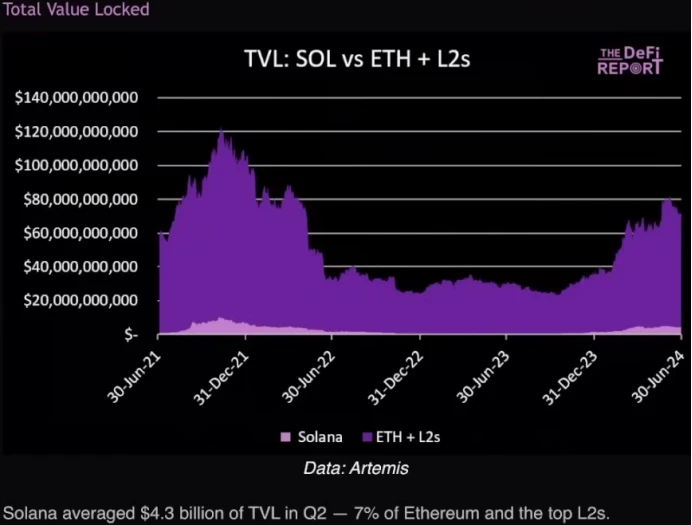
Bankless: Why is SOL still undervalued relative to ETH?
Odaily·2024/07/25 04:08
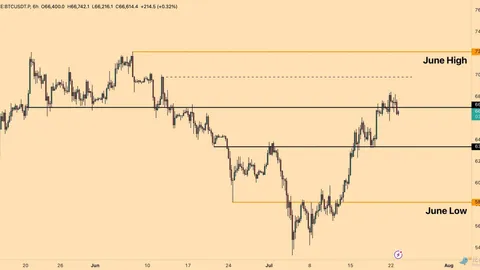
Crypto markets consolidate as investors focus on GDP and PCE data
Odaily·2024/07/25 04:08
Flash
10:28
MegaETH's native token MEGA has surged over 20% in the past 24 hours, surpassing $0.068.BlockBeats News, June 14th, according to an exchange market data, MegaETH's native token MEGA broke through $0.068, with a 24-hour percentage gain expanding to 20.13%.
08:43
The AI Boom is Fueling Tech Inflation, Rewriting a Two-Decade History of Tech Products Only Getting CheaperBlockBeats News, June 14th, AI Driving US Inflation Surge. In May, the Consumer Price Index for Computer Software and Accessories surged by 14.5% year-on-year, marking the largest annual increase since records began in 2000. Producer prices for electronic components skyrocketed by 27%, also hitting a historical high. By contrast, prior to 2026, prices for software and electronic components had been decreasing almost every year.
Currently, the price of memory alone has more than doubled in the past year, with DDR5 and DDR4 memory prices soaring by 290% year-on-year. The reason behind this surge is that AI data centers have absorbed the vast majority of global chip supply. The impact of memory prices could keep inflation elevated throughout the entire year of 2027, further compounding the existing pressures from the Iran conflict. The AI boom is fueling tech inflation.
05:56
Opinion: Anthropic Export Control Compliance Highlights Centralization Risks in AI, Decentralized AI Could Become Key Counterbalancing ForceBlockBeats News, June 14th, CoinFund founder Jake Brukhman stated that AI models naturally have centralizing attributes, making them a key target for government regulation and control. Anthropic's latest export control compliance action further confirms this trend.
He pointed out that decentralized networks can be a crucial counterbalance to the current situation, building sovereign, open, and public decentralized AI. The core challenge lies in the issue of computational power. Although it is widely believed that only trillion-dollar tech companies can afford cutting-edge model training, there is actually abundant global GPU computational power available. The key is to develop new distributed training algorithms.
Brukhman mentioned that teams such as Gensyn, Prime Intellect, Bagel, Pluralis, Nous Research, Macrocosmos AI, and Covenant AI have been exploring this direction. Although early on it was commonly believed to be infeasible, the reality has shown that distributed training can not only be achieved but also at a lower cost and with efficiency close to traditional solutions.
Furthermore, he believes that another major challenge facing decentralized AI is economic sustainability. While open-source models are important, they lack mature business models. Pluralis, by distributing model weights to participants, is exploring the commercial path of tokenizing AI models.
Brukhman stated that we are currently at a critical moment where AI will either move towards complete centralization, subject to scrutiny and unilateral government control, or establish a public AI on an open decentralized network, which will determine the industry's future direction.
News