
News
Stay up to date on the latest crypto trends with our expert, in-depth coverage.


Finance Coach Says When XRP Really Starts Moving, It Won’t Be Straight Up. Here’s Why
TimesTabloid·2026/04/04 14:06
XRP Liquidation Heatmap Just Exposed the Rally Playbook
TimesTabloid·2026/04/04 13:09

Bitcoin shorts risk $2.5 billion liquidation at $72K: Are bears in danger?
Cointelegraph·2026/04/04 12:00
Analyst to XRP Investors: The Next Impulse Will Be Televised. Here’s the Meaning
TimesTabloid·2026/04/04 11:39
Japan Tightens Crypto Cyber Rules as Microsoft Adds Billions
Cryptotale·2026/04/04 09:57
Ripple Launches First Treasury Management System: What It Means for XRP Utility
Bitcoininfonews·2026/04/04 09:42
Why Did SWIFT Select XRP and 7 Others for ISO 20022 Integration? Details
TimesTabloid·2026/04/04 08:57
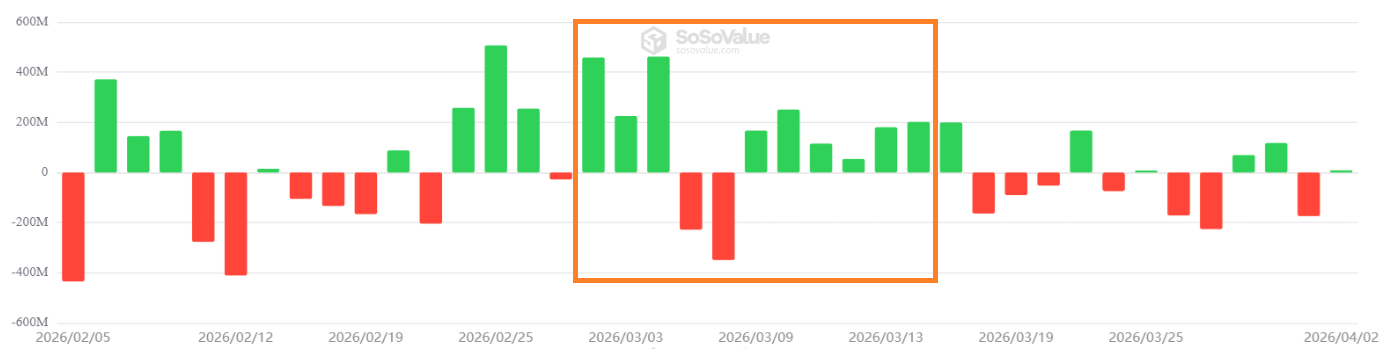
Rich Bitcoin traders lost $337M daily in first quarter of 2026
Cointelegraph·2026/04/04 08:33
Flash
00:56
Iraq pressures OPEC to increase its quota; fiscal crisis and investment inflows may trigger internal conflicts within the organization(1) The economic crisis triggered by the Iran war and a new wave of investment by international oil giants are driving Iraq to actively seek an increase in its OPEC production quota. As the second-largest oil producer in OPEC, Iraq has suffered a major blow due to the depletion of oil revenues and had even considered leaving the organization (despite the prime minister’s denial). Its average daily output in May was 1.48 million barrels, far below the nearly 4.2 million barrels per day before the war in February, but IEA data shows its production capacity is 4.9 million barrels per day—over half a million barrels higher than its July quota (4.378 million barrels per day), worth about $36 million per day at current prices.(2) Iraq has signed a series of multi-billion-dollar agreements with BP ($25 billion to develop the Kirkuk oilfield), TotalEnergies ($10 billion for the Basra project), ExxonMobil (Majnoon oilfield), and Chevron. The government plans to raise production to 7 million barrels per day over the next few years, well above the current OPEC quota. The new prime minister, Zaidi, has made rebuilding the economy and attracting foreign investment a core agenda, and has secured support from Trump. He will visit the US in mid-July and has promised to give American companies top priority treatment.(3) Experts question the feasibility of the production increase target: persistent bottlenecks in export infrastructure continue to constrain the commissioning speed of new capacity, while issues such as regulatory uncertainty, security challenges, political instability, and project execution delays still deter foreign investors. A senior analyst at Energy Aspects noted that “raising output to 7 million barrels per day faces significant obstacles—the target is overly optimistic.” A former manager of Basra Oil Company pointed out that Iraq is still working to shed its past image that discouraged foreign companies. With the UAE’s withdrawal and growing differences among Gulf member states, Iraq’s bid for a higher quota may further exacerbate internal OPEC conflicts.
00:52
Crypto KOL Ansem has airdropped 67.38 million ANSEM tokens to over 700 wallets, equivalent to approximately $9.43 million.BlockBeats News, June 30th, according to LookIntoChain monitoring, crypto KOL Ansem has airdropped 67.38 million ANSEM tokens to over 700 addresses, totaling $9.43 million. Out of this, 49.89 million ANSEM tokens (valued at $6.98 million) were sent to 7 addresses.
These 7 addresses have already sold 38.29 million ANSEM tokens, earning $1.29 million. They currently hold 11.6 million ANSEM tokens, worth $1.62 million.
00:51
SemiAnalysis: Bottlenecks in AI semiconductor construction may extend to key materials such as tungsten```htmlJinse Finance reported that on June 30, the independent semiconductor and AI research institution SemiAnalysis published an article stating that one of the most underestimated ways to participate in AI semiconductor development might not be the chip itself, but the materials. As the industry accelerates production of more advanced semiconductors, demand is growing not only for GPUs and wafer fabrication equipment, but also for the key materials that support modern chip manufacturing. Taking tungsten as an example, tungsten is one of the most critical materials in semiconductor manufacturing, valued for its high-temperature stability and resistance to electrical wear. Wafer fabs rely on chemical vapor deposition to fill deep, high aspect ratio vertical vias connecting multi-layer chip architectures, and use physical vapor deposition to deposit ultra-thin barrier layers around these structures. Since tungsten is involved in both core deposition processes, it is irreplaceable in advanced chip production. Tungsten supply appears to be increasingly constrained. High-purity tungsten metal powder is the primary raw material for producing tungsten hexafluoride, a gas used in chemical vapor deposition. Japan has key tungsten hexafluoride suppliers like SK Materials and Shin-Etsu Chemical, but is facing sharp price increases and significant reductions in tungsten raw material imports, making it nearly impossible to continue producing critical tungsten hexafluoride materials. The price pressure is also reflected in the import prices of tungsten hexafluoride in South Korea, which have increased by 151% this year. As semiconductor complexity and AI demand rise, bottlenecks may not only appear in chips or equipment, but also in critical materials at the bottom of the entire supply chain.```
News