News
Stay up to date on the latest crypto trends with our expert, in-depth coverage.


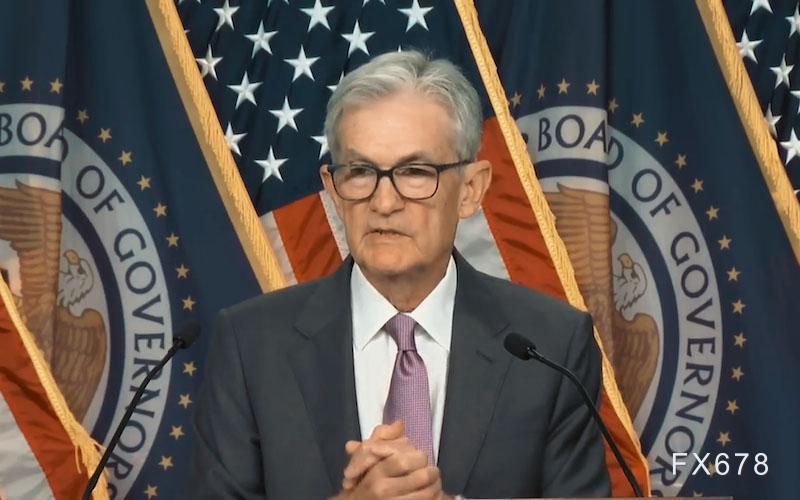
Preview of Powell's Final Battle: Market Pricing May Be Overly Optimistic
汇通财经·2026/04/28 10:17
Fed: Flat curve, late-2026 cuts possible – BNY
FXStreet·2026/04/28 09:27
BTW (Bitway) fluctuates by 56.4% in 24 hours: trading volume surge triggers intense price volatility
Bitget Pulse·2026/04/28 09:14
S&P 500: New highs despite global caution – Deutsche Bank
FXStreet·2026/04/28 08:54
EUR/USD drifts below 1.1700 as the US Dollar bounces on cautions trading
FXStreet·2026/04/28 08:27
Microsoft (MSFT) Q3 FY2026 Earnings Preview: AI CapEx Pressure Meets Growth Validation
Bitget·2026/04/28 08:25
Forex Today: BoJ maintains status quo, US-Iran uncertainty persists
FXStreet·2026/04/28 07:52
Flash
00:24
CITIC Securities: Multiple shipping routes remain tight, global container shipping rates continue to strengthenThe SCFI index has increased for seven consecutive weeks. Mainstream FAK rates are at $5,000-$5,500/FEU, with premium capacity exceeding $6,200/FEU. The shortage period for US East Coast capacity is longer than for the US West Coast. The US tariff hikes and new CPSC regulations are prompting companies to move shipments ahead of schedule. Combined with the Panama Canal’s low water levels and resulting congestion, effective shipping capacity is compressed, leading carriers to strictly control space and limit sales; capacity for late June through early July is nearly sold out. The Latin America route has entered the peak stocking season earlier than usual, with rates rising across all trade lanes. The South America East Coast route leads in rate increases, and spot capacity premiums are significant. Expected adjustments in Brazilian tariffs are driving shippers to dispatch goods in advance; persistent congestion at key Latin American ports, a notable shortage of 40ft reefer containers, and slow empty container repositioning have led carriers to continuously impose GRI and PSS surcharges, keeping upward pressure on freight rates. Rates on Asia-Europe and Mediterranean routes are also rising simultaneously. It is projected that freight rates on both routes will increase again in July. Geopolitical disturbances on Middle East routes are driving up transport costs. Seasonal cargo volume is accumulating rapidly, and Red Sea detours are lengthening vessel turnaround times. There is uncertainty regarding capacity release in the Strait of Hormuz. To ensure schedule integrity, carriers are frequently skipping ports, resulting in a sustained tight supply of space.
00:23
SK Hynix considers increasing investment in Cheongju NAND flash memory plant```htmlGelonghui June 25|According to Korea's "Maeil Business Newspaper" citing unnamed industry sources, SK Hynix is planning to build a new NAND flash factory in Cheongju, Korea. The overall investment plan for the area is expected to be unveiled at a relevant meeting at the presidential office on June 29. The core of Hynix's plan is to further invest in the Cheongju NAND flash factory area. The company previously built the M15 factory there in 2018. In addition, Samsung Electronics currently produces advanced chips such as HBM at its packaging facilities in Cheonan and Onyang, Korea.```
00:21
Micron to Provide Strong Signal: Memory Shortage to Extend Through 2028, AI Boom to Reshape Cycle NarrativeBlockBeats News, June 25th - Micron revealed in today's early morning earnings call that its strategic customer agreements have increased from 1 in the previous quarter to 16, covering approximately 20% of DRAM shipment volume and about 1/3 of NAND shipment volume; of which 14 agreements are priced at the minimum contract price, with the remaining term generating cumulative revenue of approximately $100 billion. CEO Sanjay Mehrotra stated that these agreements will "fundamentally change" the business model. The key point of this news is that the market will reposition Micron from a highly cyclical memory stock to an AI infrastructure supplier with stronger revenue visibility.
In the earnings call, Micron disclosed that it expects the industry's tight state to continue beyond 2027, and even if the supply gradually improves by 2028, it is still unclear when the supply will catch up with the demand. Management attributed the reason to the large, complex, and time-consuming scale of constructing new fabs.
CFO Mark Murphy mentioned that DRAM revenue increased by 343% year-over-year to $31.3 billion, NAND revenue increased by 361% year-over-year to $9.9 billion; DRAM prices rose in the low-60% range, and NAND prices in the mid-80% range. He explained that the significant earnings beat in this quarter's financial report was mainly relying on pricing power and supply-demand imbalance, rather than purely on shipment volume.
The company expects capital expenditures of approximately $10 billion this quarter, around $27 billion for FY2026; capital expenditure in FY2027 will be higher than in FYQ4, with more than half of it going towards cleanroom construction. However, the CFO also mentioned that free cash flow for this quarter is expected to continue to increase significantly.
Overall, the content of this earnings call conveyed to the market the signal of "continued memory shortage + willingness of customers to sign long-term agreements + prices still have room to rise." This led to MU surging nearly 16% in after-hours trading, hitting a new all-time high of $121.3, driving up the entire storage sector.
News