
News
Stay up to date on the latest crypto trends with our expert, in-depth coverage.


Arthur Hayes: Why Venezuelan Oil Matters for Bitcoin
Coinspeaker·2026/01/06 09:03
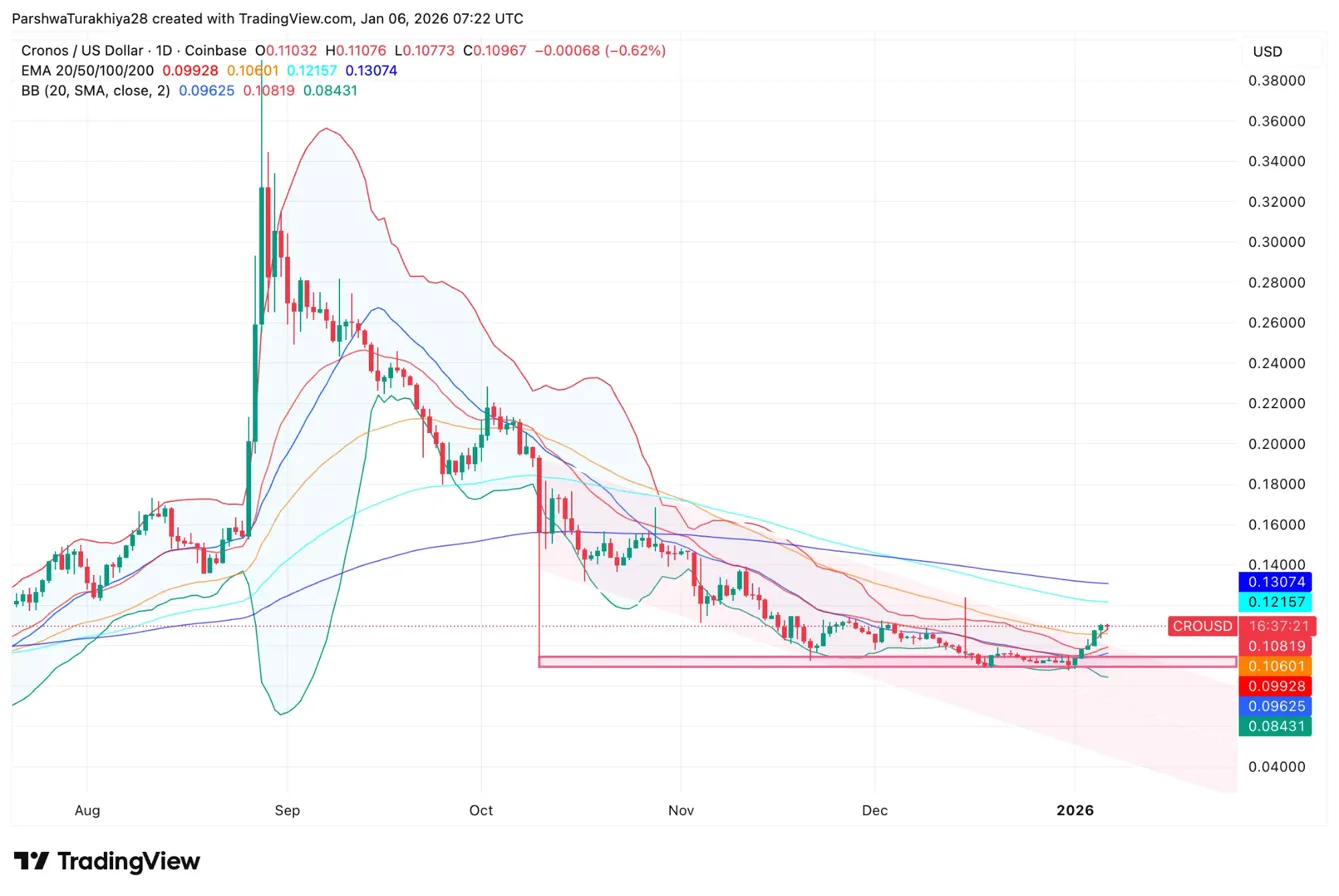
Cronos Price Prediction 2026: Trump Media $6.4B Treasury and Tokenization Platform Target $0.20-$0.35
CoinEdition·2026/01/06 09:00
Bitcoin Institutional Buying Surges: 8-Day Bullish Streak Signals Major Market Shift
Bitcoinworld·2026/01/06 08:42
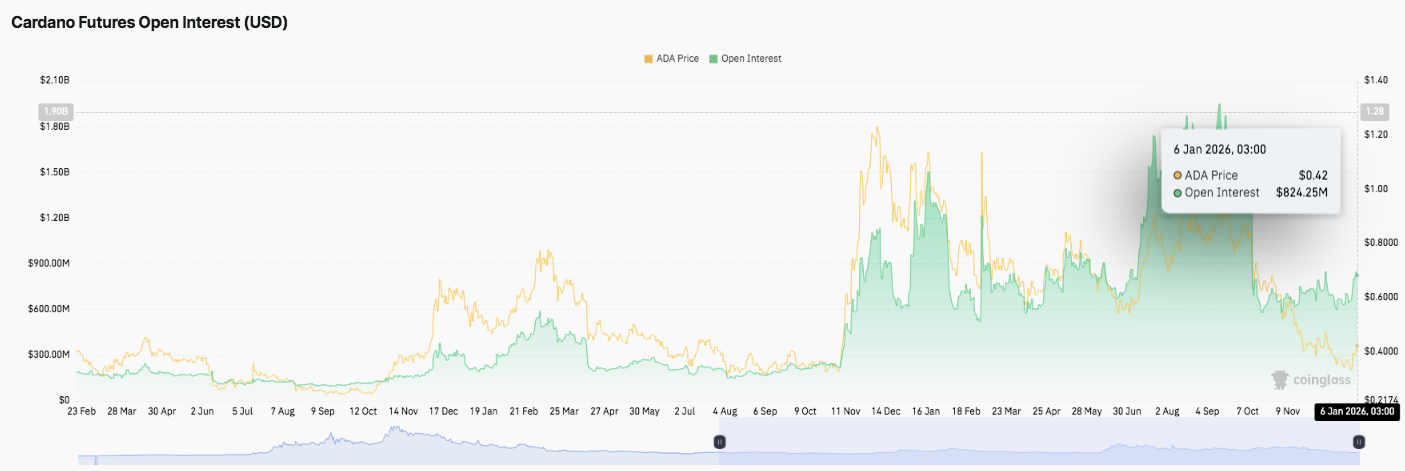
Cardano Price Prediction: ADA Recovery Continues but Confirmation Still Eludes Bulls
CoinEdition·2026/01/06 08:27
USDJPY Technical Analysis: Attention shifts to Japan's wage figures and US Non-Farm Payrolls
101 finance·2026/01/06 08:24
ANT-FUN Partners with Cache Wallet for Secure and Seamless DEX Trading and DeFi Cross-Chain Access
BlockchainReporter·2026/01/06 08:15
Crypto Surge Starts 2026 Strong with New Market Dynamics
Cointurk·2026/01/06 08:03
AUD/JPY rises above 105.00 as risk-on sentiment improves
101 finance·2026/01/06 08:00
Crypto IPOs Underperformed S&P 500: The Surprising Reality Behind 2024’s Disappointing Public Offerings
Bitcoinworld·2026/01/06 07:51
Near Protocol Price Prediction: Expert Analysis Reveals Potential 2X Surge by 2030
Bitcoinworld·2026/01/06 07:51
Flash
10:11
Morgan Stanley expects US stock market funds to shift towards mega-cap companies, setting a year-end target of 8,000 points for the S&P 500 Index.Morgan Stanley strategists said that US stock market funds will shift from semiconductor stocks to mega-cap companies such as Microsoft, Amazon, and Meta, with a year-end target of 8,000 points for the S&P 500 index.
10:07
The Red Sea vessel attack incident escalates, geopolitical risk premiums return to the oil market, and shipping security threats are repriced.⑴ The United Kingdom Maritime Trade Operations reported on Monday that a bulk carrier was attacked by unidentified armed personnel approximately 30 nautical miles southwest of Hodeidah, Yemen, on Sunday. Following the approach of armed small boats and subsequent gunfire, the onboard security personnel returned fire. The attackers then retreated to a larger vessel about 2 nautical miles away, which had disabled its Automatic Identification System.⑵ Although both the cargo ship and crew reported safe conditions and authorities have launched an investigation, this attack occurred near an area controlled by Houthi forces. It directly revived market pricing memories of security threats in Red Sea shipping, with geopolitical risk premiums providing short-term support to crude oil futures.⑶ The attack did not cause vessel damage or casualties, but the armed small boats relied on a larger mothership with its identification system switched off to launch their assault. Such tactical characteristics suggest the attack may have an organizational background rather than being an isolated act of piracy, prompting shipping insurance and transit costs in the region to face reassessment pressures.⑷ The Red Sea route supports the global transport of large quantities of energy and goods. Any substantial threat to commercial ships can trigger expectations for detours, extended voyage times, and tightened shipping capacity. Even though this incident caused no substantial damage, the market's sensitivity to dual navigation risks in the Strait of Hormuz and the Red Sea has risen significantly.⑸ So far, no group has claimed responsibility, but the geographical location and previous record of Houthi attacks in the area are highly consistent. Traders are closely monitoring further investigation progress and potential military responses. The short-term fluctuation center of oil prices will partially depend on whether this event develops into a logic of sustained escalation of escort costs.
10:04
The discount on Middle Eastern benchmark crude widens as a surge in spot supply puts pressure, and the OPEC+ production increase adds more uncertainty.⑴ On Monday, Middle Eastern benchmark crude Oman, Dubai, and Murban spot discounts generally widened, with sustained supply pressure becoming the main suppressing factor. The cash Dubai premium over swaps fell by $0.19 to $3.70 per barrel, fully revealing weakness in the spot market. ⑵ Gulf oil-producing countries have recently accelerated their deliveries. Since June, Abu Dhabi National Oil Company has conducted its fifth spot tender, with the latest batch selling about 16 million barrels of Murban crude at an even wider discount. The cumulative spot tender sales have exceeded 70 million barrels, directly reflecting the flood of spot supply impacting the pricing system. ⑶ OPEC+ confirmed on Sunday that it will further increase production targets starting in August. This coincides with the gradual recovery of crude exports through the Strait of Hormuz, causing a double blow on the supply side and further worsening already pressured oil prices. Market concerns over a short-term supply-demand imbalance continue to rise. ⑷ On the spot trading side, traders such as Trafigura and Mercuria are intensively delivering September-loading Oman crude to Trafigura, with transaction prices fixed at $64.10 per barrel. Cash Dubai closed at $64.10 per barrel on the previous day, compared to $63.80 the day before. The pressured pattern in nearby contracts shows no sign of improvement. ⑸ Last week, Indian refineries purchased about 7 million barrels of crude oil via tenders, including 5 million barrels of combined Angola and Nigeria cargoes acquired by Indian Oil Corporation, and 2 million barrels of Brazil Tupi crude bought by Stanlow Oil, with delivery windows concentrated in late August to early September, showing that Asian demand continues to steadily absorb supply. ⑹ Currently, front-month Brent prices are now lower than six-month forward contracts, with the term structure flattening further or even deepening into contango. This reflects that after the recovery of shipping through the Strait of Hormuz, the excess supply pressure in the spot market is being fully released through the price curve, with overall market sentiment remaining bearish. ⑺ On Monday, Korean prosecutors accused four domestic refiners and employees of two companies of conspiring to manipulate fuel prices, claiming $17 billion in damages. On the same day, Japanese Ministry of Economy, Trade and Industry officials revealed that strategic crude oil inventories fell in June by an amount equivalent to four days of consumption. Geopolitical and regulatory disturbances add extra uncertainty to the short-term trend.
News