
News
Stay up to date on the latest crypto trends with our expert, in-depth coverage.

1Bitget UEX Daily | Fed’s Third-in-Command Signals Steady Policy Stance; SanDisk and Micron Lead AI Sector Gains Amid Divergent US Stocks; PCE Inflation Beats Expectations, Heightening Policy Uncertainty2SPX Blocks Musk's Loss-Making SPCX3 Strategy escapes crisis signal despite heavy hedging, Anchorage says

Hanging Man!
阿东聊米股·2026/06/26 03:57
Base to Activate B20 Token Standard on Mainnet Today
Bitcoinworld·2026/06/26 03:57
Bitcoin Miners Operating at Break-Even as Industry Faces ‘Most Complex Restructuring’
Bitcoinworld·2026/06/26 03:57
Toss enters first Web3 partnership with Poseidon to build AI data economy
Bitcoinworld·2026/06/26 03:57
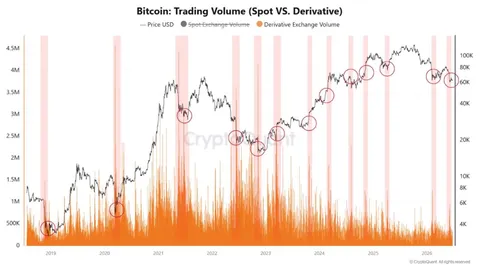
Bitcoin Volume Spikes Raise Odds of a Larger Move as Price Stays Range-Bound
CoinEdition·2026/06/26 03:55

The Next Fortune-Making Cryptos May Still Be Flying Under the Radar—Are These 5 Worth Holding?
Cryptonewsland·2026/06/26 03:54
Gold weakens back below $4,000 as Fed hike bets and Hormuz risks support safe-haven USD
FXStreet·2026/06/26 03:51
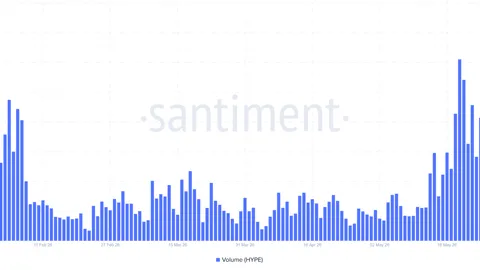
Hyperliquid price prediction: What’s next as HYPE bulls target $77 resistance?
AMBCrypto·2026/06/26 03:33
🔥 Bitget US Stock Hotspot Sniper|2026.06.26
·2026/06/26 03:21
Asia’s Tech Stocks Take the Hit as Apple and Microsoft Push Chip Costs to Consumers
BeInCrypto·2026/06/26 03:18
Flash
03:56
Survey shows strong semiconductor demand; South Korea’s exports are expected to achieve even stronger growth in JuneGlonghui, June 26 — Thanks to strong demand for semiconductors, South Korea’s exports in June are expected to achieve even stronger growth, with the monthly trade surplus likely to surpass $30 billion for the first time. According to the median forecast from a Wall Street Journal survey of nine economists, South Korea’s exports in June are expected to increase by 57.3% year-on-year, higher than the revised 53.4% in May. Imports in June are expected to rise by 23.5% year-on-year, boosting the monthly trade surplus to $32 billion. Meritz Securities chief economist Seunghoon Stephen Lee said that chips and computers are seen as the main drivers behind export growth, and export growth is expected to remain above 50% in the second half of the year.
03:56
Strong Semiconductor Demand Expected to Drive Even Stronger Growth in South Korea's Exports in June```htmlGolden Ten Data reported on June 26 that, thanks to strong semiconductor demand, South Korea's exports in June are expected to achieve even stronger growth, and the monthly trade surplus may surpass $30 billion for the first time. According to the median forecast from a survey of nine economists by The Wall Street Journal, South Korea's exports in June are expected to increase by 57.3% year-on-year, higher than the revised 53.4% in May. Imports in June are forecasted to grow by 23.5% year-on-year, pushing the monthly trade surplus to $32 billion. Meritz Securities Chief Economist Seunghoon Stephen Lee stated that chips and computers are seen as the main drivers of export growth, and the export growth rate is expected to remain above 50% in the second half of this year.```
03:55
Opinion: Micron's Earnings Beat Expectations, but Price Hikes from Apple and Microsoft Could Shift Market Sentiment from 'Embracing Price Increases' to 'Concerns about Demand Destruction'BlockBeats News, June 26th - Today, the market's sell-off of AI and storage stocks is being explained by a new narrative: the true trigger for the sentiment reversal was not Micron's poor earnings report, but rather the price hikes initiated by tech giants such as Apple and Microsoft.
It is reported that on June 25th, Apple raised prices on multiple Mac and iPad models by approximately 15%-25%, citing a significant increase in the prices of memory and storage chips such as DRAM and NAND due to the surge in demand from AI data centers. Microsoft also announced price increases for Xbox consoles starting from August 1st, with the 512GB and 1TB models seeing price hikes of $100 and $150 respectively, attributing the reasons similarly to the soaring costs of storage and memory.
This viewpoint has already emerged in discussions among overseas media and some market participants. Business Insider referred to Apple's price hike as "wiping out the tech stock rebound triggered by Micron's earnings report," and Futurum CEO Daniel Newman also mentioned that Apple's price hike made the market realize that the increase in storage prices has shifted from upstream profits to consumer costs.
If only Micron's earnings report were considered, the market should have been more optimistic. Micron's revenue and profit far exceeded expectations, indicating that the demand for storage in AI is still strong, and HBM, DRAM, and NAND have not entered a demand collapse phase. In other words, Micron's earnings report proves that the AI hardware cycle is still ongoing, even hotter than the market expected. However, the price hikes by Apple and Microsoft changed the market's interpretation.
In the past, the increase in storage prices was mainly seen as a boon for upstream companies. The fact that Micron, Samsung, and SK Hynix could raise prices indicated supply shortages, showed that AI data centers are still expanding, and demonstrated that profits would continue to flow to the hardware end. But when end-user giants like Apple and Microsoft also begin to pass on costs to consumers, what the market sees is not just "upstream profit-taking" but rather "downstream starting to struggle."
The viewpoint holds that high profits for storage manufacturers per se are not an issue, but if these profits come from persistently squeezing the downstream, then application providers, end-user hardware manufacturers, and consumers will all ultimately bear the costs. Apple's price hike indicates that high storage costs are no longer just an internal financial issue within the supply chain but are beginning to affect product prices. Microsoft's price hike also indicates that this pressure is not limited to a single company but is a challenge faced by the entire consumer electronics and AI hardware ecosystem.
What the market is concerned about is not the price hike itself, but the demand disruption after the hike. Can consumers accept more expensive computers, tablets, consoles, and AI services? Can app companies continue to expand under higher computing costs? Can cloud providers turn capital expenditures into a high enough income? Once these questions become a reality, the logic of storage stocks will shift from "benefiting from price hikes" to "suffering backlash from price hikes."
News