Bitget Options Guide: What Options Are and How to Trade
1. What are options?
Options are financial derivative contracts that give the buyer the right—but not the obligation—to buy or sell an underlying asset (such as a stock or ETF) at a predetermined price (the strike price) on or before a specified date (the expiration date). In exchange for receiving the premium, the option seller assumes the corresponding obligation. If the buyer chooses to exercise the option, the seller must fulfill the contract.
🌰 For example:
Suppose you believe a stock will rise significantly next month, but you're not completely certain and don't want to buy the shares outright. Instead, you pay $50 for an option contract that gives you the right to purchase the stock at $200 anytime within the next 30 days.
● If the stock rises to $500: You exercise the option, buy the shares at $200, and sell them at $500, generating a gross profit of $300. After deducting the $50 premium, your net profit is $250.
● If the stock falls: You simply let the option expire. Your maximum loss is limited to the $50 premium you paid.
In simple terms, an option allows you to pay a small amount for the opportunity to participate if the market moves in your favor, while limiting your downside to the premium paid if it doesn't.
2. Key components of options
| Key components | Description |
| Underlying asset | The asset on which the option is based, typically a stock, ETF, or index (such as the SP 500 or NASDAQ-100). A standard option contract generally represents 100 shares of the underlying stock. |
| Strike price | The agreed-upon price in the contract at which the underlying asset can be bought or sold. |
| Expiration date | The last day the option remains valid. After this date, the contract expires automatically. |
| Premium | The price paid by the buyer to purchase the option. The premium fluctuates based on factors such as the underlying asset's price, market volatility, and time remaining until expiration. |
| Type | Options can be classified in several ways, including the rights they confer, exercise timing, underlying asset, and the relationship between the strike price and the market price. At launch, Bitget supports the two primary option types based on the rights. they confer: call and put options. |
● Underlying asset: The asset on which the option is based, typically a stock, ETF, or index (such as the SP 500 or NASDAQ-100). A standard option contract generally represents 100 shares of the underlying stock.
● Strike price: The agreed-upon price in the contract at which the underlying asset can be bought or sold.
● Expiration date: The last day the option remains valid. After this date, the contract expires automatically.
● Premium: The price paid by the buyer to purchase the option. The premium fluctuates based on factors such as the underlying asset's price, market volatility, and time remaining until expiration.
● Type: Options can be classified in several ways, including the rights they confer, exercise timing, underlying asset, and the relationship between the strike price and the market price. At launch, Bitget supports the two primary option types based on the rights they confer: call and put options.
3. Call options vs put options
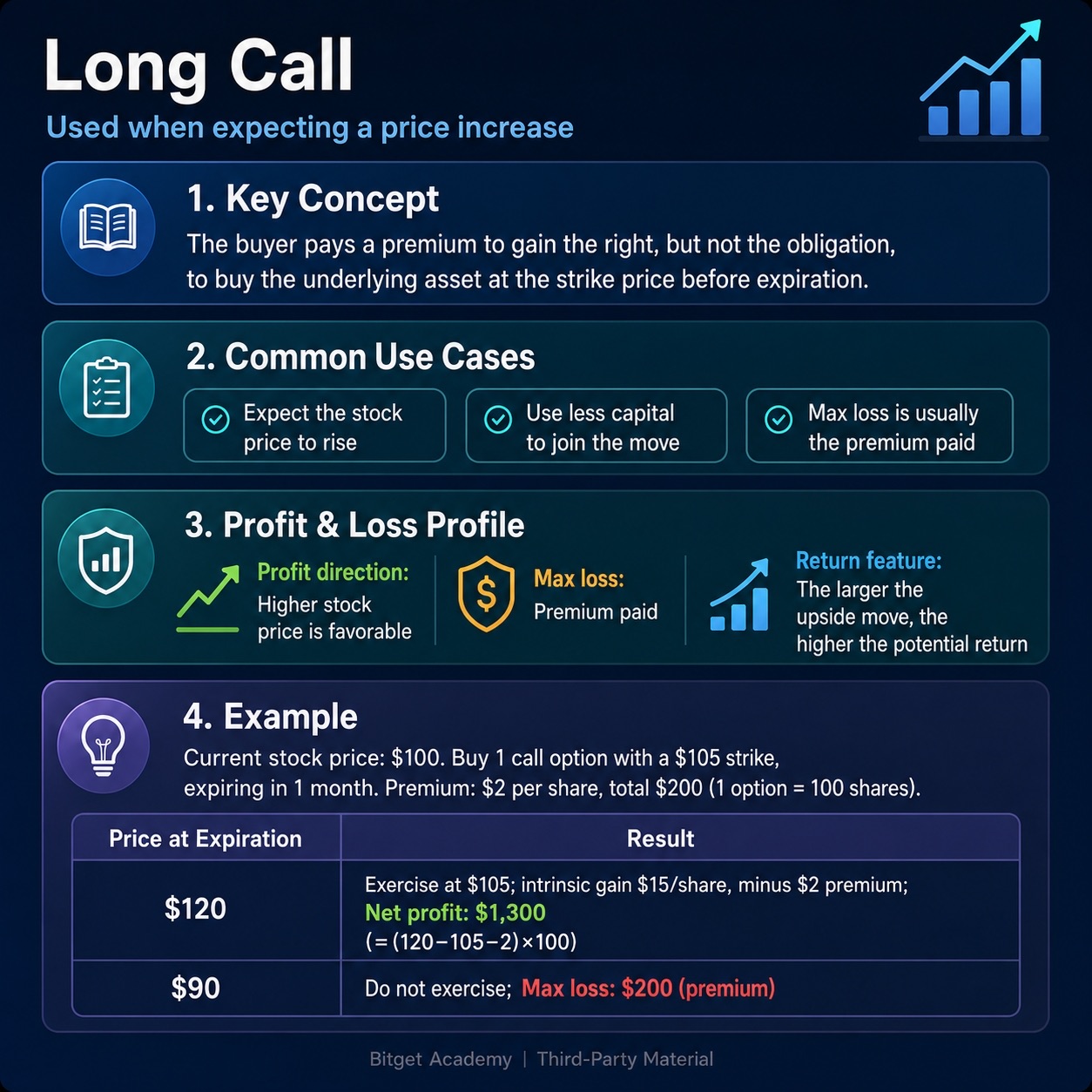
● Long call: The buyer has the right to purchase the underlying asset at the strike price. It is best suited for investors who expect the underlying stock price to rise. A long call provides leveraged exposure, allowing you to control more shares with less capital than purchasing the stock outright. If the stock price rises, the option's value typically increases. If the stock price falls, your maximum loss is limited to the premium paid.
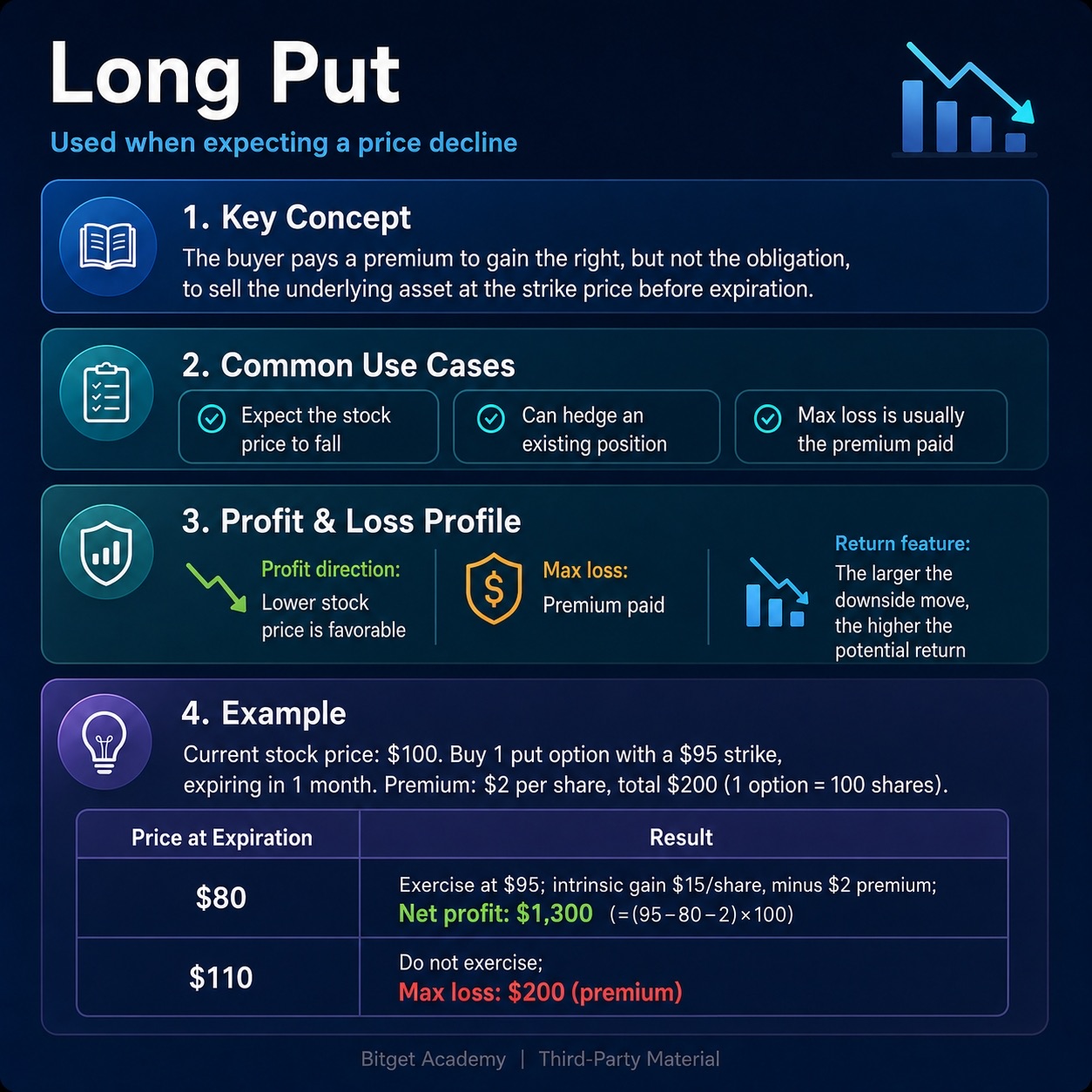
● Long put: The buyer has the right to sell the underlying asset at the strike price. It is generally used when you expect the stock price to decline or want to hedge downside risk in an existing stock portfolio.
|
|
|
4. Why trade options?
1. Leverage: Options allow you to control a larger number of shares with a smaller amount of capital (the premium), amplifying potential returns.
2. Flexible strategies: Options can be used for speculation (predicting price direction), hedging (protecting existing positions), and income generation (selling options to collect premiums).
3. Limited downside risk (for buyers): When buying options, the maximum loss is capped at the premium paid. This is unlike short selling stocks, where losses can theoretically be unlimited.
4. Diversified allocation: Options provide additional tools for managing portfolio risk and adjusting your investment strategy across different market conditions.
Bitget launches U.S. stock options trading
To help users capture more opportunities in the U.S. stock market, Bitget officially launches U.S. stock options trading in July. At launch, Bitget offers 547 U.S. stock options, covering constituent stocks of major indices (such as the SP 500 and NASDAQ-100) as well as popular ETFs. Support for additional stock and ETF options will be rolled out gradually. All Bitget users enjoy zero trading commissions on U.S. stock options.
To celebrate the launch, Bitget is launching a special trading promotion on July 6. Eligible users who register for the promotion and complete their first qualifying Bitget Stock+ options trade will receive $15 worth of NVIDIA stock as a reward. At launch, Bitget supports buy-to-open and sell-to-close orders for long call and long put options, as well as closing non-standard option contracts. The platform also offers convenient features such as PnL estimates during order placement and support for order modification and cancellation. U.S. stock options can be traded from 9:30 AM to 4:00 PM ET (Eastern Time).
5. How to trade U.S. stock options on Bitget
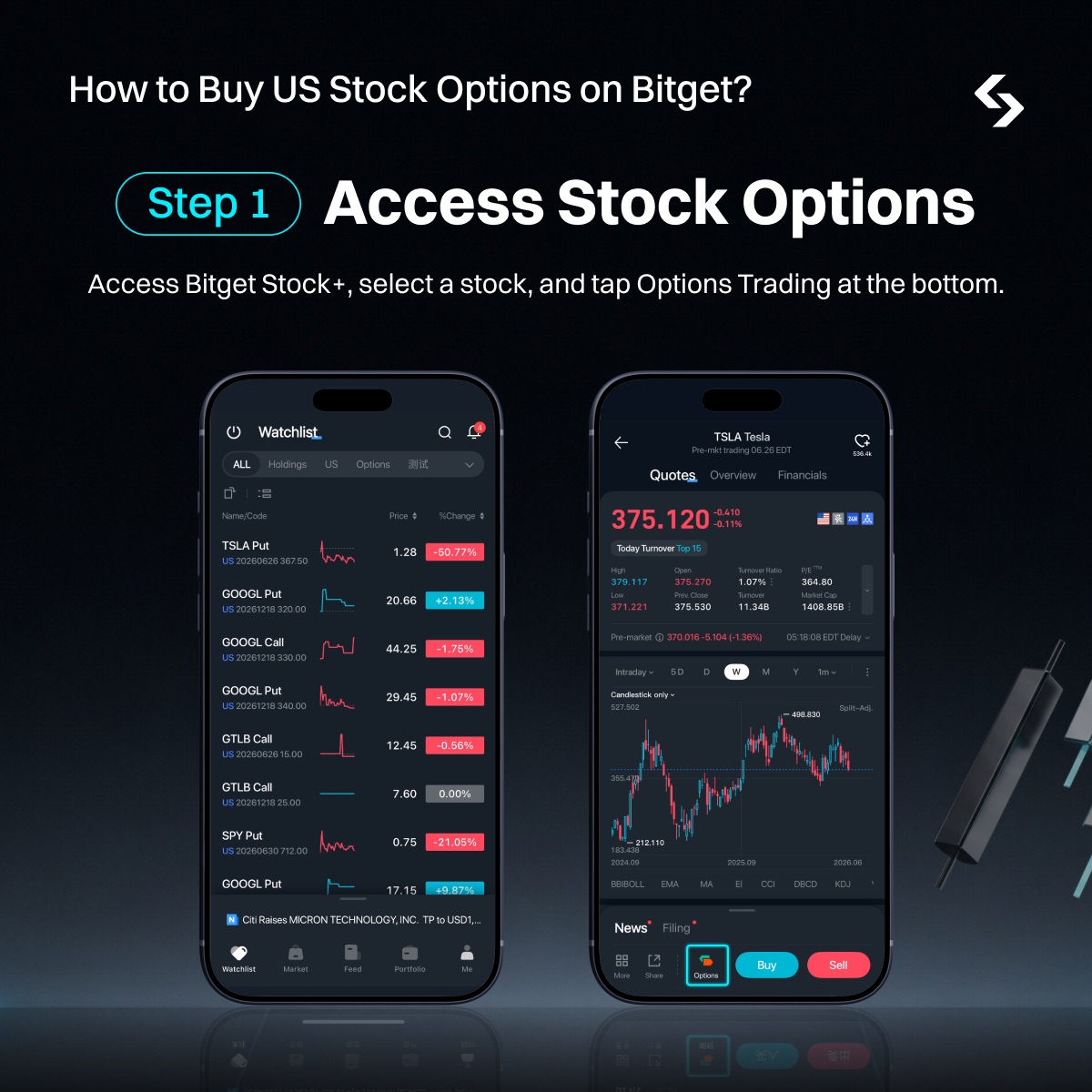
Bitget's U.S. stock options trading experience is designed to be simple and intuitive. Update your app to the latest version, navigate to Bitget Stock+, select the stock you want to trade, and tap Options at the bottom of the stock page.
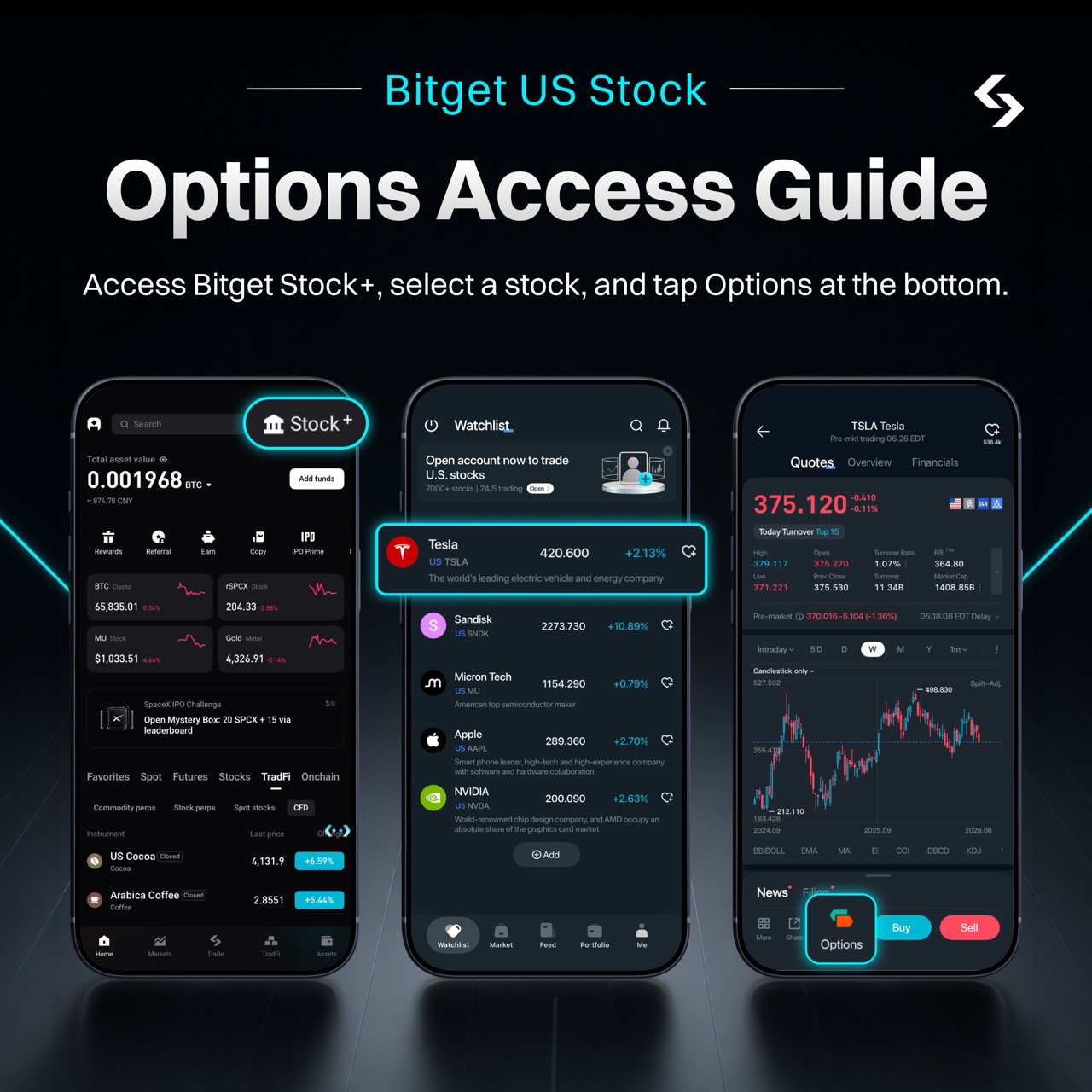
● Step 1: Open the Options page for your selected stock.
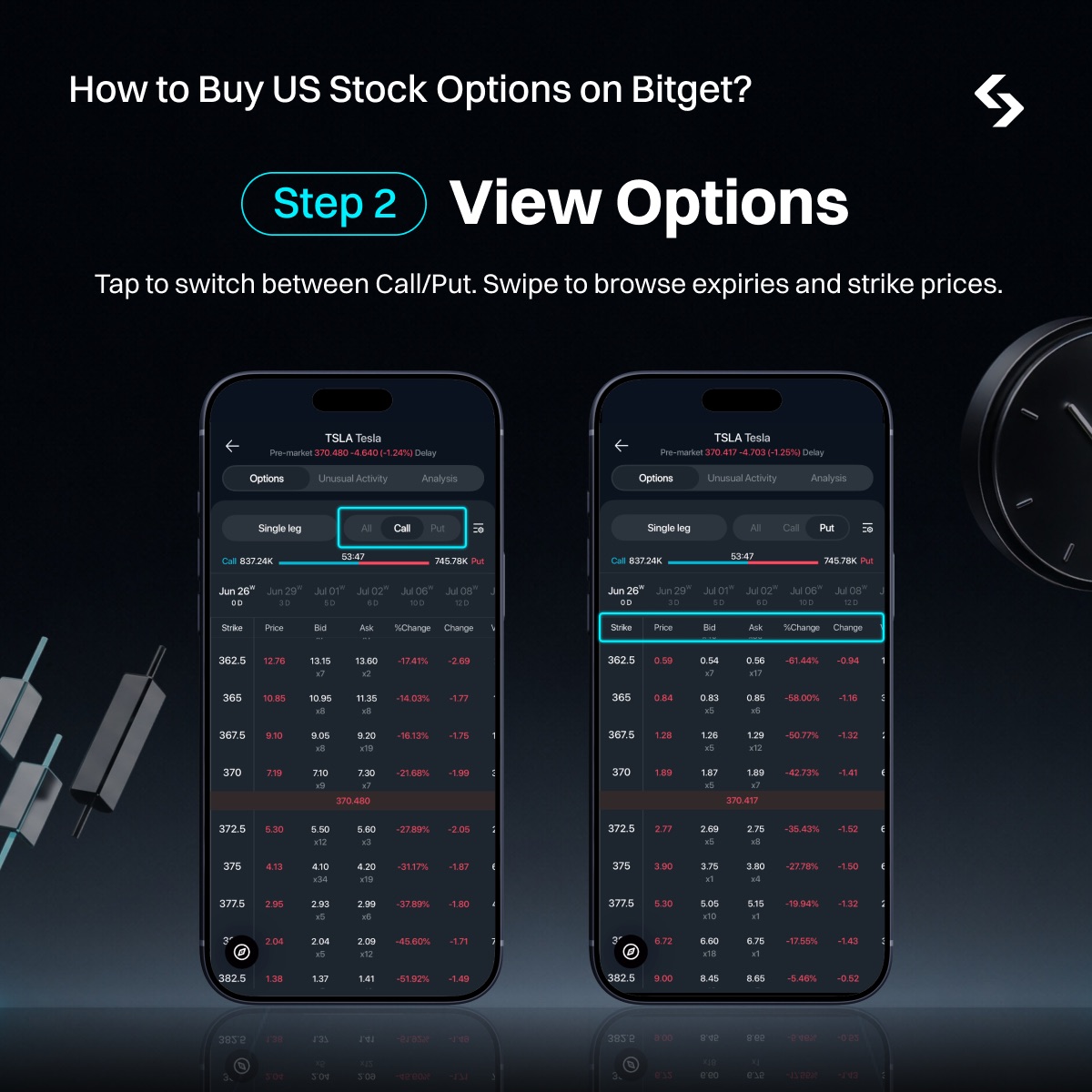
● Step 2: Browse the available option contracts. Switch between call and put options, then swipe to explore different expiration dates and strike prices.
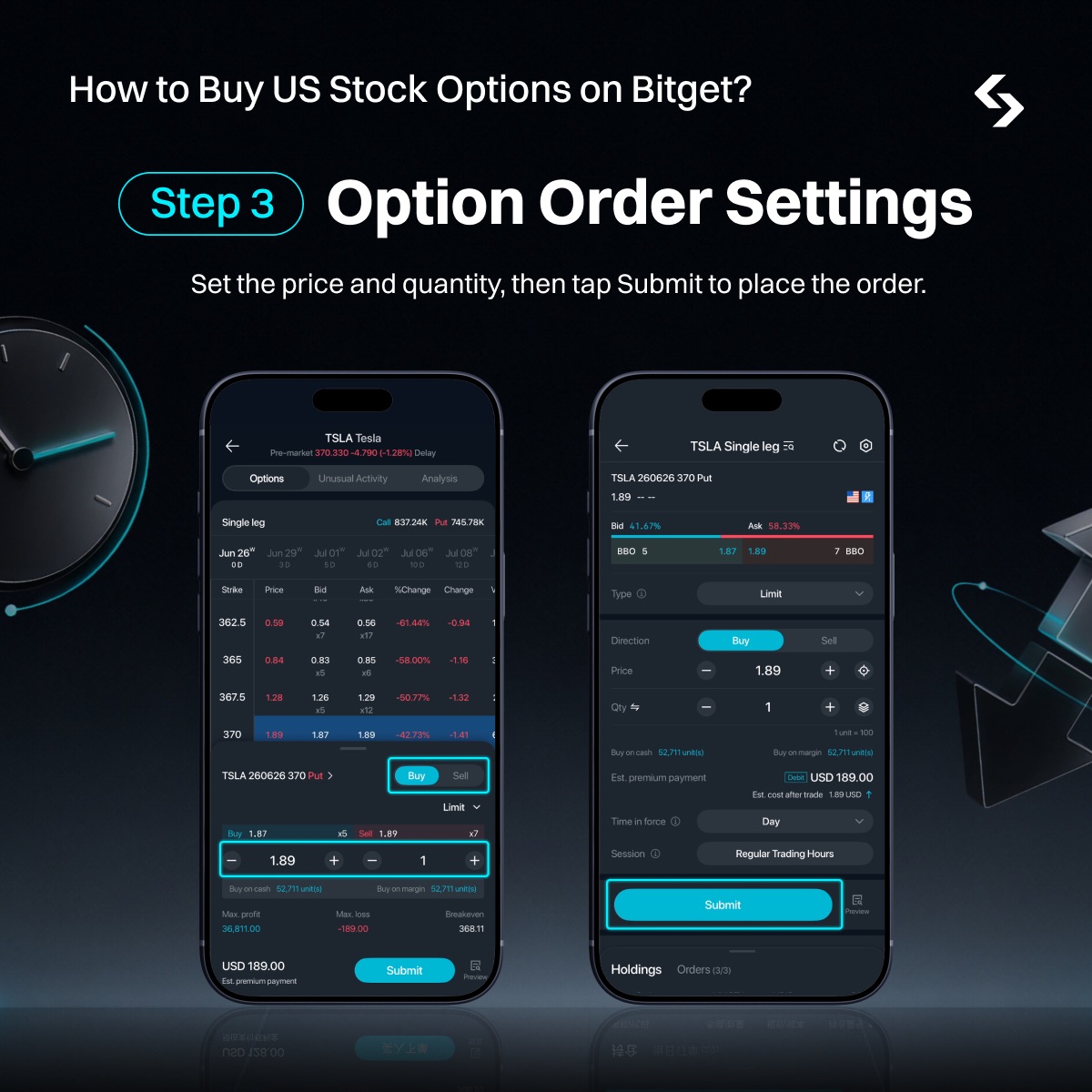
● Step 3: Set up your order by entering your desired price and the number of contracts, then tap Buy.
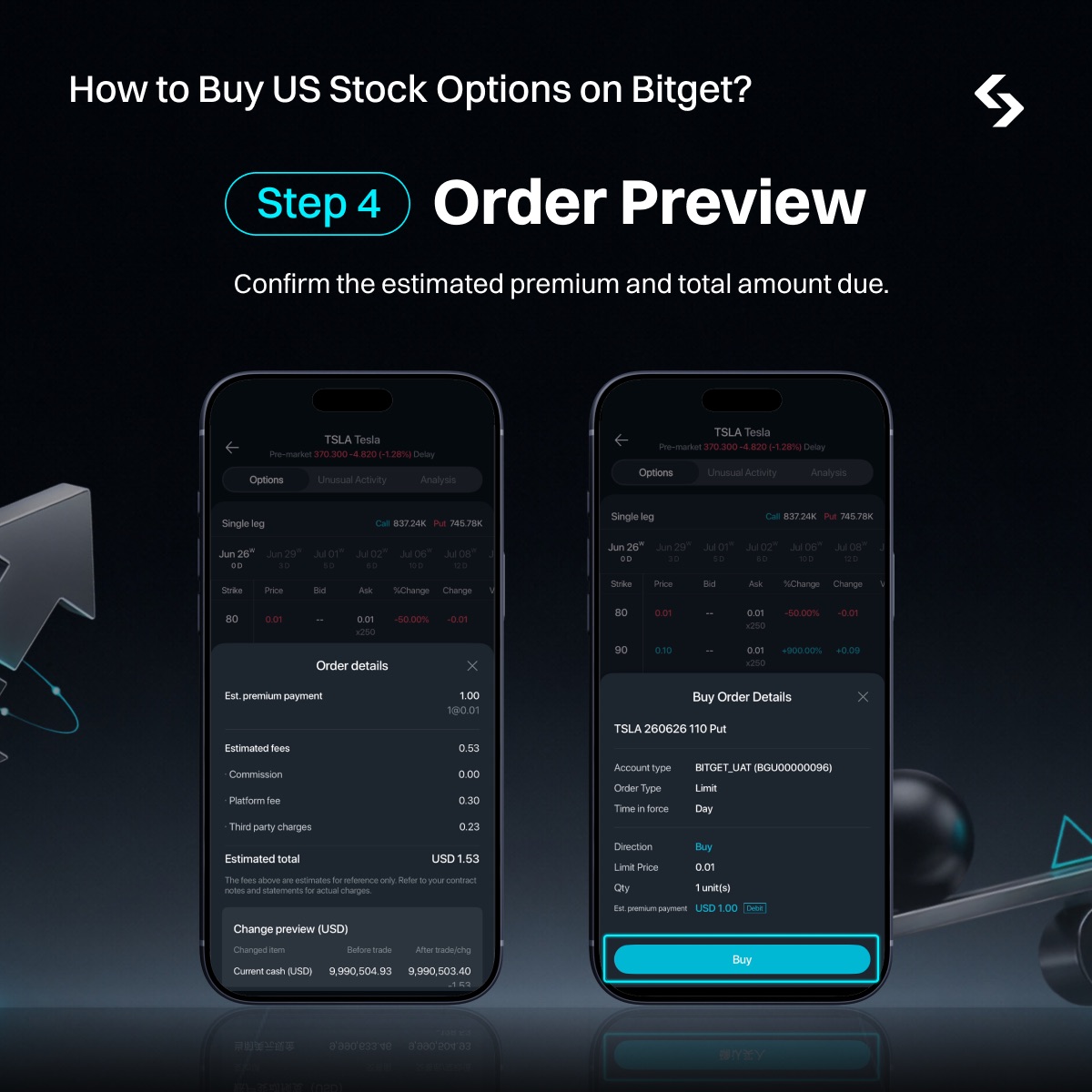
● Step 4: Review your order details. The confirmation window displays the estimated premium and the total amount payable before you submit the order.
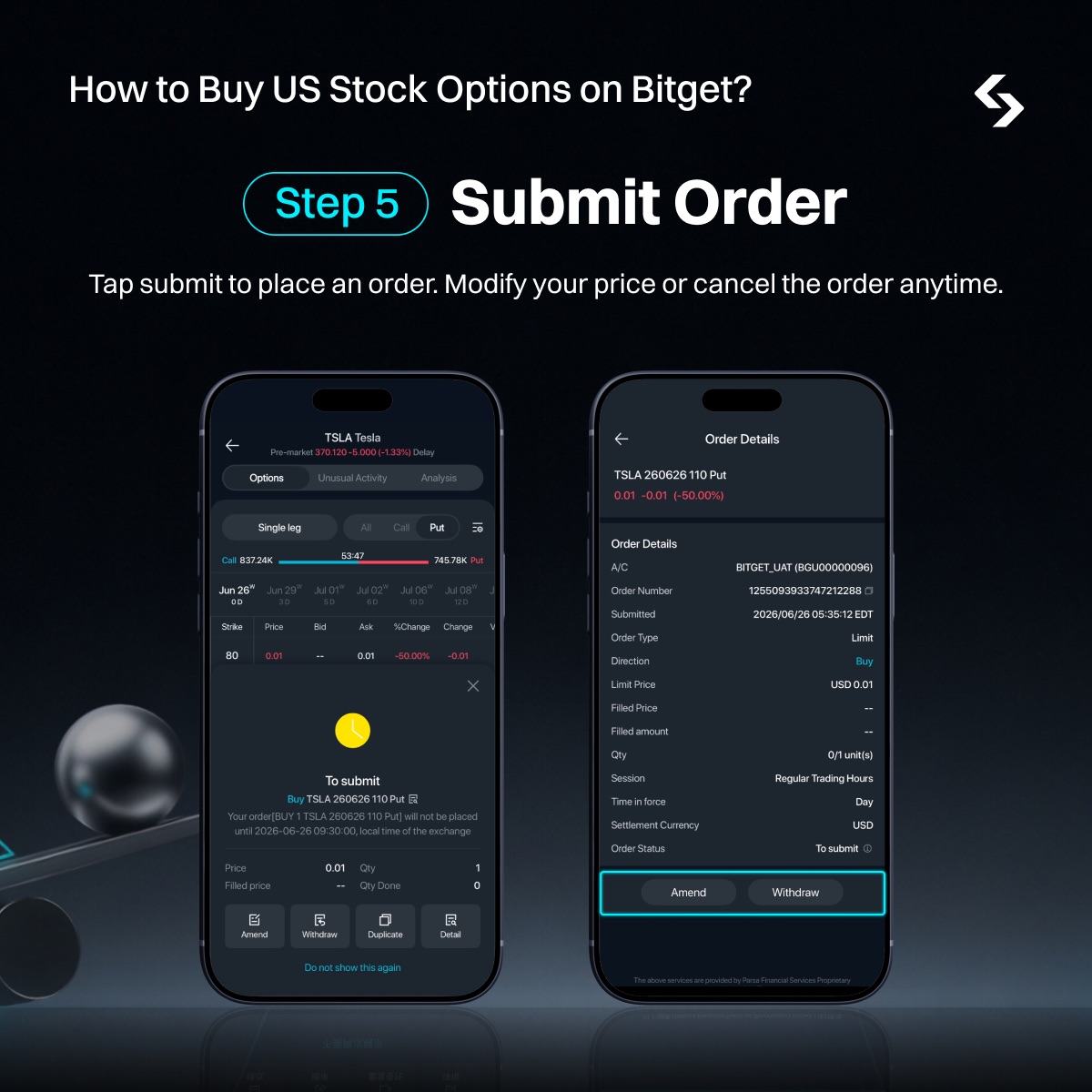
● Step 5: Submit your order. Once submitted, you can view the order details and modify or cancel the order.
|
|
|
|
|
|
6. Risk control and important notes
● Time decay (Theta): An option's value declines as time passes, particularly as it approaches its expiration date.
● Volatility impact: Higher volatility can increase both the potential gains and the potential losses of an options position.
● Exercise and settlement: In-the-money (ITM) options may be exercised automatically at expiration. Buying options requires full payment of the premium upfront, and margin borrowing is not supported. Bitget follows T+1 settlement, consistent with the U.S. stock market.
● Non-standard contracts: Certain non-standard option contracts support closing positions only.
● Fees: Options trading may involve platform fees, SEC fees, FINRA fees, clearing fees, and exercise/assignment fees. While Bitget charges zero trading commissions, applicable third-party fees still apply.
Conclusion
Stocks represent direct ownership, while options are contracts that grant specific buying or selling rights. Options offer greater flexibility and allow the use of leverage, but are also more complex. They are best used to complement an investment portfolio rather than replace it. Bitget U.S. stock options offer zero trading commissions, flexible strategy support, and promotion rewards (such as NVIDIA stock rewards for first-time traders), empowering users to seize opportunities in the U.S. market. Whether you're looking to hedge existing positions or gain leveraged market exposure with less capital, options can become a valuable addition to a diversified investment strategy.
Options trading involves risk. Please trade responsibly. We encourage you to learn and practice through trusted platforms such as Bitget and to seek professional advice where appropriate.


- 1. What are options?
- 2. Key components of options
- 3. Call options vs put options
- 4. Why trade options?
- 5. How to trade U.S. stock options on Bitget
- 6. Risk control and important notes
- Conclusion