South Park’s latest episode satirizes prediction market apps by showing students betting on political and personal events, highlighting regulatory scrutiny and recent CFTC moves that eased pressure on Kalshi and Polymarket. The satire underscores how prediction markets intersect with crypto, law and public debate.
-
Satire meets regulation: South Park mocked prediction markets and US regulators in a new episode, using Kalshi- and Polymarket-style apps as targets.
-
Regulatory change: the CFTC eased enforcement actions in 2024–2025, affecting political-event markets for Kalshi and Polymarket.
-
Industry impact: Polymarket received a no-action letter and Kalshi won a lower-court ruling, reducing immediate US legal risk.
South Park prediction markets satire: Read how the show skewers Kalshi and Polymarket amid CFTC shifts — full breakdown and regulatory context. Read now.
What did South Park say about prediction markets?
South Park prediction markets were lampooned in the episode “Conflict of Interest,” where students used a Kalshi- or Polymarket-style app to bet on school lunches, geopolitical outcomes and fictional baby details. The segment framed prediction markets as controversial social instruments and highlighted ongoing US regulatory scrutiny by the CFTC and other agencies.
How did the episode portray regulators and market figures?
The show portrayed regulators like the US Commodity Futures Trading Commission (CFTC) and public figures as inept and comically entitled, while referencing real-world actors such as advisory-board members to emphasize the cultural tension around event contracts. South Park used satire to question whether oversight is keeping pace with new market models.
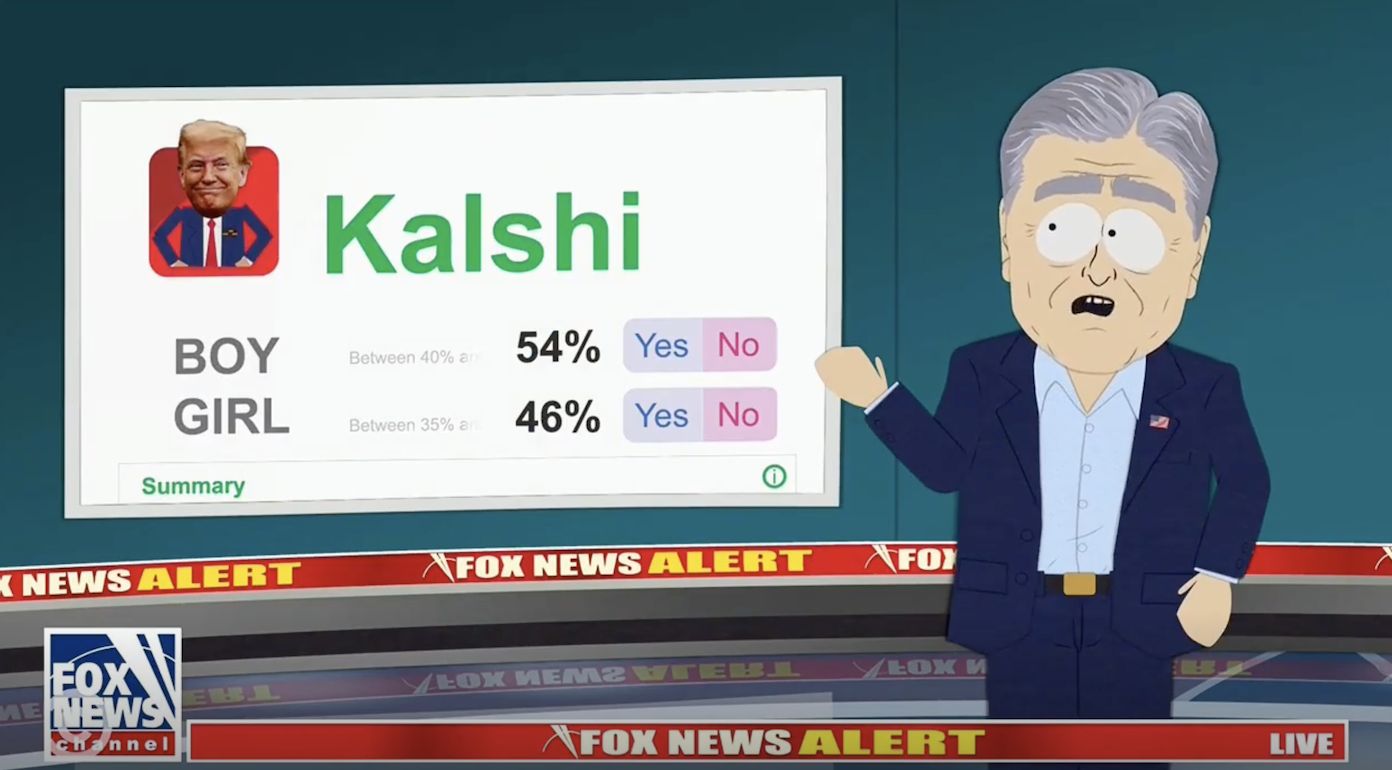
Fictional Kalshi bet featured on the latest episode of South Park. Source: Comedy Central
Why does this matter for crypto and prediction markets?
Front-loaded: prediction market apps are a crypto-adjacent sector that tests legal boundaries around event contracts and speculative markets. The show’s satire matters because public perception and regulatory narratives can influence investor confidence and policy decisions affecting crypto-linked products.
What is the current regulatory status for Kalshi and Polymarket?
Kalshi prevailed in a lower-court decision against a 2023 CFTC order, and the CFTC later paused its appeal. Polymarket received a no-action letter permitting certain event contracts without full reporting obligations. These actions reduced near-term enforcement risk but left broader rulemaking unresolved.
| Kalshi | Lower-court ruling vs CFTC | Legal victory; CFTC appeal dropped |
| Polymarket | No-action letter issued | Allowed limited US activity without enforcement |
How do prediction markets work?
Prediction markets let users buy and sell contracts based on the outcome of future events. Prices aggregate collective odds and can reflect crowd-sourced probability estimates. Smart contracts and blockchain infrastructure are often used to settle outcomes and manage payouts.
Frequently Asked Questions
How did the CFTC’s stance change recently?
The CFTC moved to drop an appeal against Kalshi after a lower-court ruling and issued a no-action letter for parts of Polymarket’s business. These steps signaled a softer enforcement posture under acting leadership while broader regulation remains unsettled.
What does this mean for crypto investors?
Investors should note that regulatory clarity is improving in pockets but not uniform. Event-contract platforms may expand US activity, yet legal and compliance risks persist. Watch official CFTC announcements and platform disclosures.
Key Takeaways
- Satire highlights regulation: South Park brought mainstream attention to prediction markets and their legal questions.
- Regulatory easing: CFTC actions have reduced immediate enforcement risk for Kalshi and Polymarket.
- Market implications: Platform developments could influence crypto-adjacent product availability and public perception; monitor official statements and court outcomes.
Conclusion
South Park’s episode on prediction markets combined satire and real-world context to spotlight Kalshi, Polymarket and the CFTC’s evolving stance. The exchange between popular culture and regulatory developments can reshape public understanding and market activity—readers should follow official filings and platform disclosures for updates.
Among the bets the characters made in the animated series included whether the fictional baby created by Donald Trump and Satan was a boy or a girl.
The animated series South Park already kicked off its 27th season by ripping into cryptocurrencies and politics, and its most recent episode set its sights on prediction market apps.
In its episode titled Conflict of Interest, which aired on Wednesday, the characters in South Park’s elementary school engaged in a debate over the merits of prediction markets and the role US regulators had in overseeing them.
Among the bets they made on a Kalshi- or Polymarket-type app included guessing school lunches, the outcome of conflicts between Israel and Palestine and whether a fictional baby was a boy or a girl.
The show also poked fun at the individuals in charge of prediction markets and US regulators, including the US Commodity Futures Trading Commission (CFTC) and Federal Communications Commission (FCC), claiming they were “highly professional strategic advisers,” while portraying a character resembling Donald Trump Jr., who joined Polymarket’s advisory board in August.
South Park has regularly incorporated cryptocurrency and blockchain themes into its satire. Past episodes have featured US President Donald Trump’s connections to crypto, labeled Bitcoin (BTC) a “fly-by-night Ponzi scheme,” and made fun of people investing in non-fungible tokens (NFTs).
The show’s 27th season launched after its owner, Paramount Global, reached a $16 million settlement with Trump over allegations of deceptive editing in an interview. The show consistently mocks the US president.
Federal scrutiny of prediction markets seems to be waning in the US
Kalshi had been engaged in a legal battle with the CFTC after the US regulator ordered the company to stop offering political event contracts in 2023. A lower court ruled in favor of Kalshi, prompting a CFTC appeal, which the regulator moved to drop in May while under acting Chair Caroline Pham.
Polymarket has similarly fared well with the CFTC under Pham. On Sept. 3, the financial regulator issued a no-action letter for two Polymarket entities, allowing the company to offer event contracts without reporting the data required under US regulations, without the threat of enforcement.
Polymarket CEO Shayne Coplan said at the time that the CFTC’s action had given Polymarket “the green light to go live in the USA.”
South Park prediction markets satire: how the show skewers Kalshi and Polymarket amid CFTC shifts — read COINOTAG’s concise regulatory analysis and implications.